

He asked for a single track. Kendrick said, “Bet,” and handed over a cultural canon instead.
Wakanda Forever… and the Beat Goes On
Let’s rewind to 2018—a time when the Marvel machine spit out superheroes like gumballs, but Black Panther was something else. It wasn’t just a movie. It was a moment. A visual, cultural, and emotional turning point for Black audiences around the globe.
But here’s what they don’t teach in Film School 101: the soundtrack didn’t just ride the movie’s coattails—it drove the narrative straight into the bloodstream of pop culture. And behind that musical magic? One man: Kendrick Lamar.
Well, Kendrick and a bold little ask from director Ryan Coogler that went completely off-script—in the best way possible.
The Original Plan: A Cameo Track, Maybe Two
According to a recent Complex interview, Coogler didn’t set out to make a Grammy-nominated, culturally seismic album. He just wanted a song. Something that captured the soul of Wakanda. Maybe an anthem to bookend a scene.But Kendrick doesn’t do “maybe.” When Coogler explained the film’s themes—Afrofuturism, identity, legacy, liberation—Kendrick didn’t see an assignment. He saw a canvas.
And in true “watch me work” fashion, he decided one track wasn’t going to cut it. Nope. Kendrick Lamar gave us an album. A damn masterpiece.
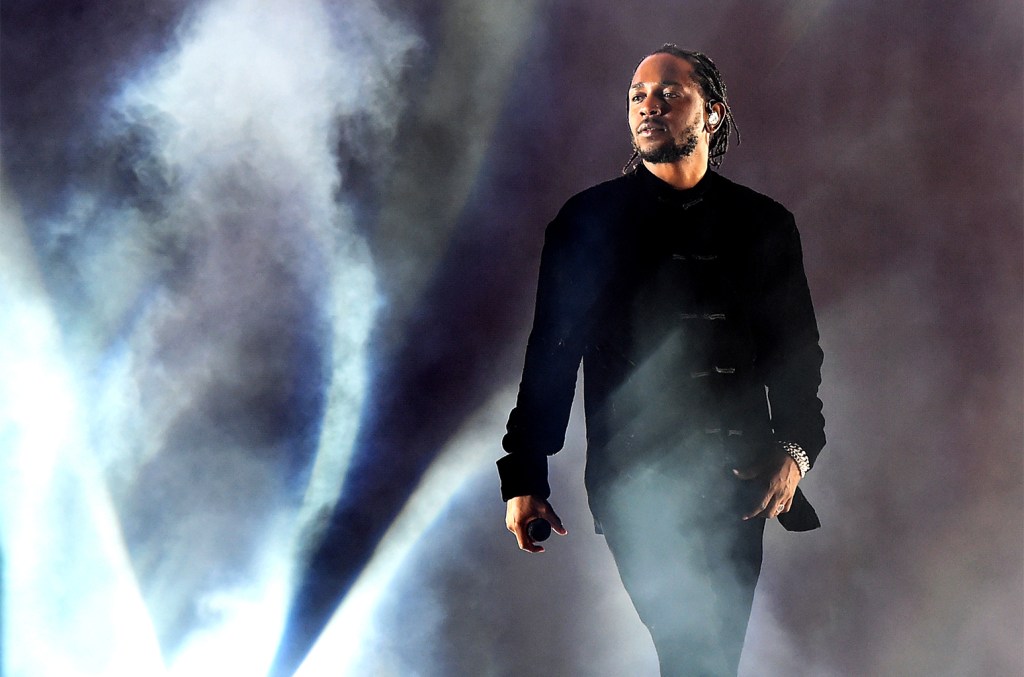
Kendrick Didn’t Phone It In—He Went Full Wakandan
Let’s get one thing clear: this wasn’t your typical Hollywood promo album stacked with throwaway verses and half-baked hooks. Kendrick curated, crafted, and committed.
He studied the characters, the themes, the emotional undercurrents. He turned every track into a mirror—reflecting the film’s pulse while giving it a heartbeat of its own.
From “All the Stars” (feat. SZA) drenching us in longing and power, to “King’s Dead” (feat. Jay Rock, Future, and James Blake) giving villainy a chaotic soundtrack, every single cut mattered.
You could listen to the Black Panther soundtrack and feel the storyline without even watching the film. That’s rare. That’s Kendrick.
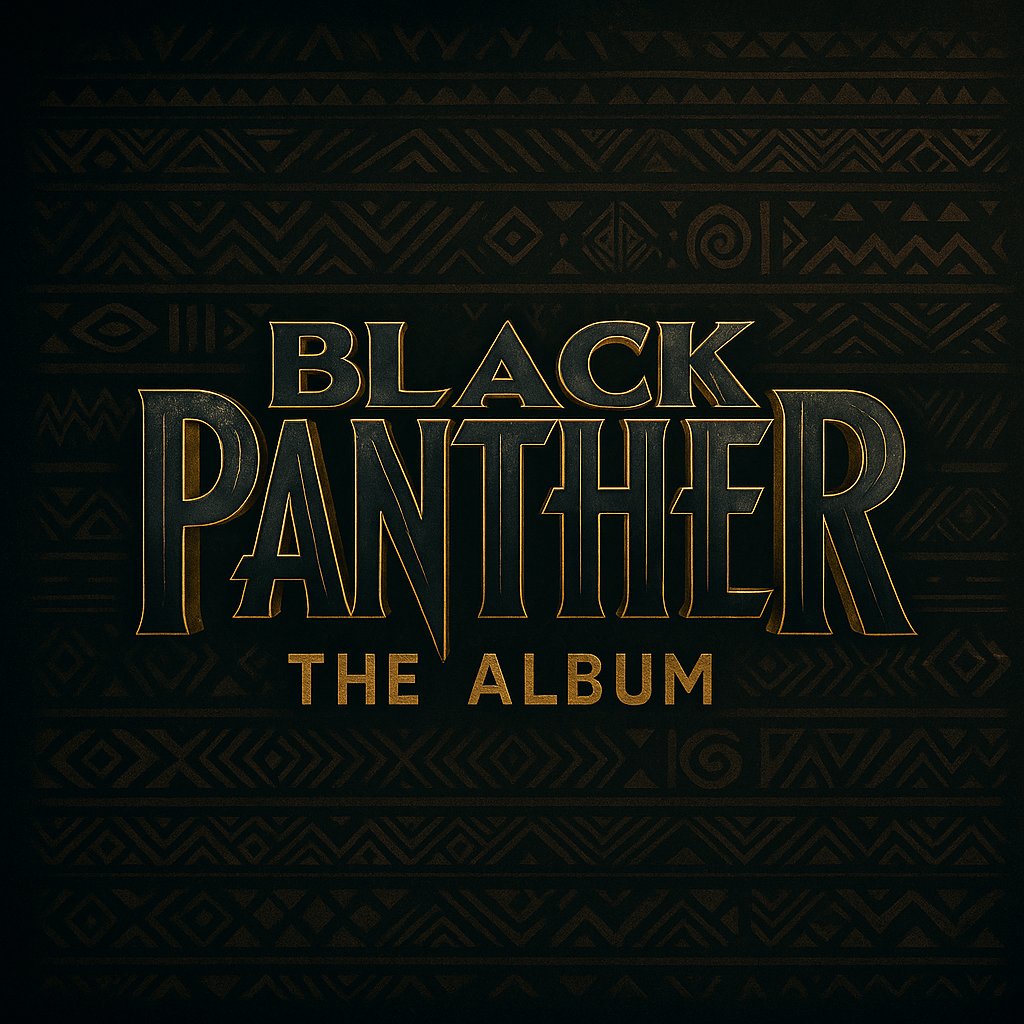
A Soundtrack That Slapped and Shifted Culture
Let’s talk numbers. The album debuted at No. 1 on the Billboard 200. “All the Stars” scored multiple Grammy noms and an Oscar nomination. But stats aside, the true win was impact.
This was a Black album for a Black superhero movie at a Black cultural peak—crafted by one of the most visionary Black artists alive. It wasn’t about mainstream validation. It was about handing the aux cord to a community that had waited too long for the spotlight.
For Black Millennials, this wasn’t just a vibe. It was an emotional victory lap. It was the gym soundtrack, the commute mood-booster, the therapy session in headphones.
Coogler’s Ask Was Small. Kendrick’s Vision Wasn’t.
Ryan Coogler’s genius doesn’t just lie in directing actors or choreographing action scenes—it’s in knowing when to trust creative energy.
He could’ve asked Kendrick to do a track and kept it moving. Instead, he gave space. He stepped back. And that space birthed a cultural artifact.
If you’ve ever doubted the power of asking bold questions—or doubted your own capacity to do something wild and game-changing—let this be your sign: ask anyway. Invite anyway. You might end up with your own version of a Pulitzer-worthy soundtrack.
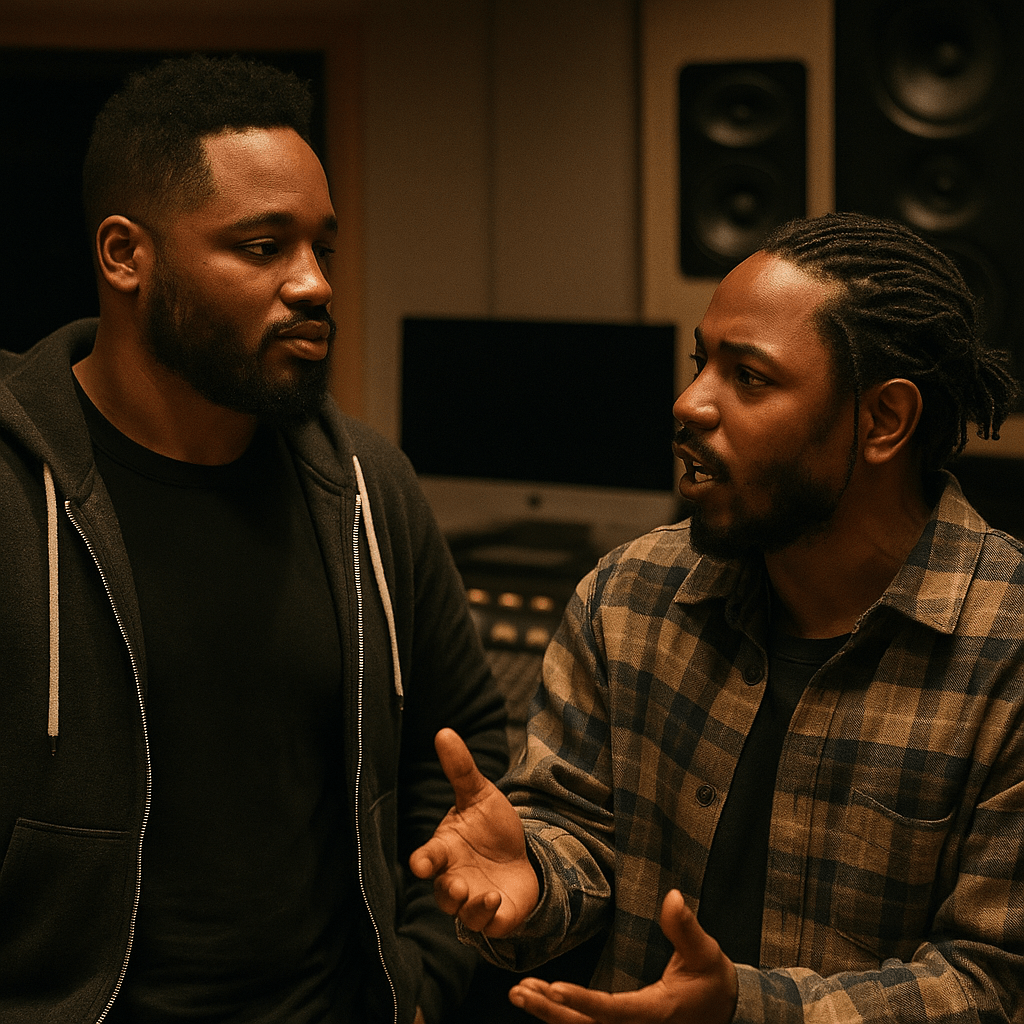
The Ripple Effect: Fans, Legacy, and Sonic Armor
This album didn’t fade after the credits rolled. It bled into playlists, award shows, protests, and prom nights. It was affirmation and armor.We saw Black children performing “Pray For Me” on talent show stages. We heard “Opps” blasting from speakers at protest marches. It lived beyond the theater. And that’s the definition of influence.
Ask any music lover where they were the first time they heard “Paramedic!” and watched Shuri shade the hell out of T’Challa’s outfit. You remember. It was a moment.
What We Can All Take from This
This story is a blueprint.
For creators: Collaborate with people who expand your vision, not shrink it.
For dreamers: Ask the bold question. You’re not too much. The world needs exactly your kind of “too much.”
For everyone: Recognize when art isn’t just content—it’s community. Kendrick didn’t just make songs. He made soundtracks for our spirits.
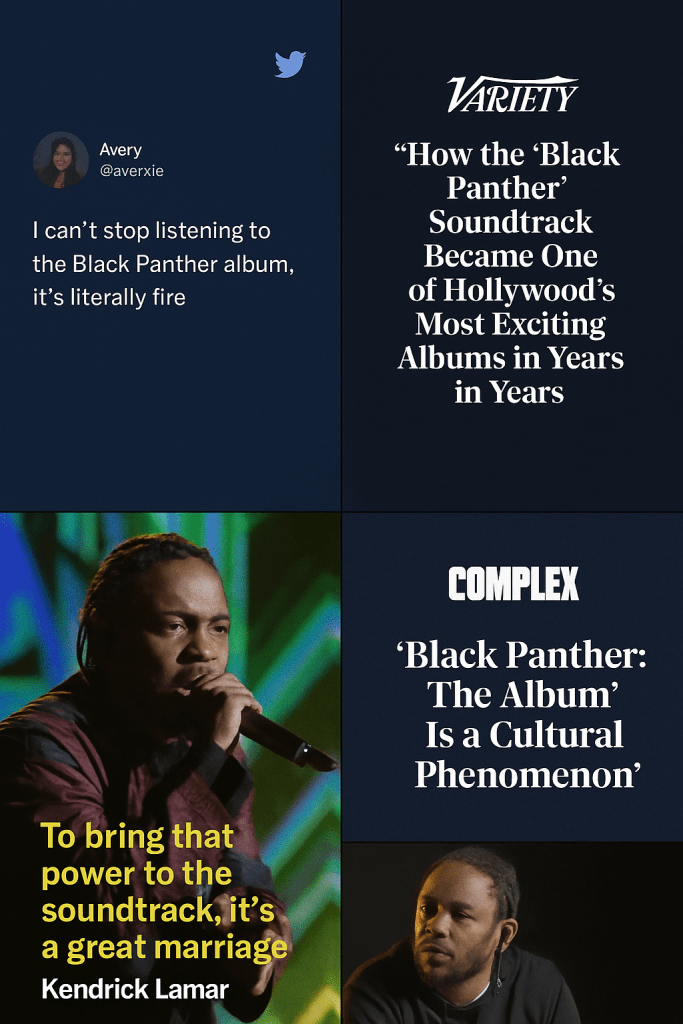
TL;DR: This Album Changed the Game
What started as “hey, can you give us a song?” became an album that reshaped what a film soundtrack could do.
Kendrick Lamar didn’t just show up—he showed out. He built an auditory Wakanda and invited us to live in it.
This isn’t nostalgia. This is a reminder: art matters. Collaboration matters. And every once in a while, somebody asks for a feature—and gets a movement instead.




 Fierce Millenial
Leave a comment