

Have you ever had surgery? What for?
From fibroids to fat grafts, this is your permission slip to talk about your surgery story — without apology, secrecy, or shame.
Let’s Cut to the Chase: Have You Ever Had Surgery?
Raise your hand if you’ve ever been laid out on an operating table, thinking “Damn, this better be worth it.” Whether it was emergency, elective, cosmetic, or medical, surgery is one of those life events that changes you — physically and psychologically. But somehow, in a culture where we post everything, surgical scars often stay under wraps.
Why?
Because we’re taught to be strong, not soft. Because talking about health feels like a luxury. Because no one wants to be seen as “weak” or “dramatic” — especially not Black women.
But here’s the thing: surgery is not a confession — it’s a story. And it deserves to be told.
Scar Stories: The Surgeries We Don’t Talk About
Let’s be real: many of us didn’t choose surgery, it chose us. From fibroids to C-sections to gallbladders that betrayed us in the middle of vacation, Black women are overrepresented in surgery statistics — but underrepresented in the dialogue.
Fibroids: The Uninvited + Unwanted Guests
- Fact check: Up to 80% of Black women develop fibroids by age 50.
- Many of us are silently suffering with heavy bleeding, anemia, pain, and bloat so intense it’s mistaken for pregnancy.
- Hysterectomy is often pushed as a “quick fix” — even when less invasive options exist.
C-Sections & Birth Trauma
- Black women are three times more likely to die from pregnancy-related causes in the U.S.
- Many of us are not given full information or options — we’re just wheeled in and stitched up.
- And then we’re expected to bounce back like Beyoncé in a crop top. Unrealistic. Unfair. Unacceptable.
Cosmetic or Elective? Doesn’t Matter.
- If you’ve ever had liposuction, breast reduction, or a BBL, guess what? That’s still surgery.
- The pain is real. The risk is real. And the reason — whether it’s self-love or society — deserves respect.
My Story: “Oh, You Still Got Your Uterus?”
Let me make this plain: I had a myomectomy at 38. I bled through everything for months. Woke up drenched. Missed work. Carried emergency pads like I was prepping for a flood. And yet… I still waited years to say yes to surgery because I was scared. Of dying. Of waking up without my womb. Of having to explain it to people who wouldn’t understand.
But when the surgeon held up the MRI and said, “Your uterus looks like it’s growing its own planets,” I knew it was time.
Recovery wasn’t cute. The pain meds turned me into a philosophical zombie. I couldn’t lift a purse for weeks. But I also couldn’t believe I’d waited so long.
What’s wild is how many women whispered, “Me too,” when I told my story.
Why are we whispering?
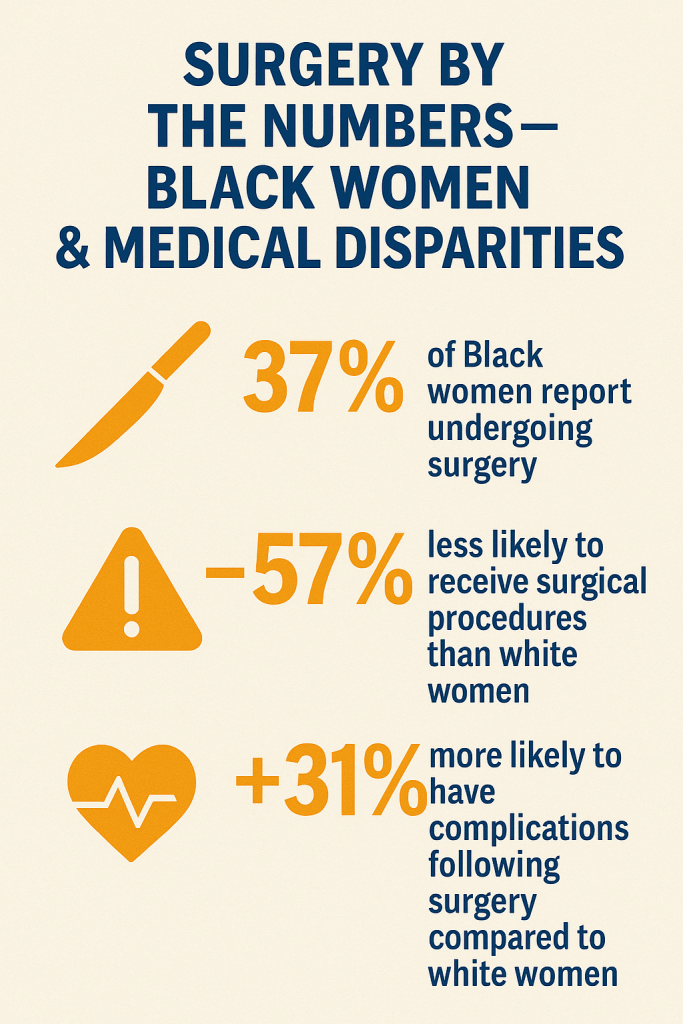
The Medical Bias is Real — and It’s Deadly
Let’s talk about the medical system and Black women — or better yet, let’s drag it.
- We’re less likely to be given pain meds.
- We’re more likely to have our symptoms dismissed.
- We’re not given all the treatment options, especially in gynecological care.
- We’re rarely centered in clinical research, yet disproportionately affected by diseases.
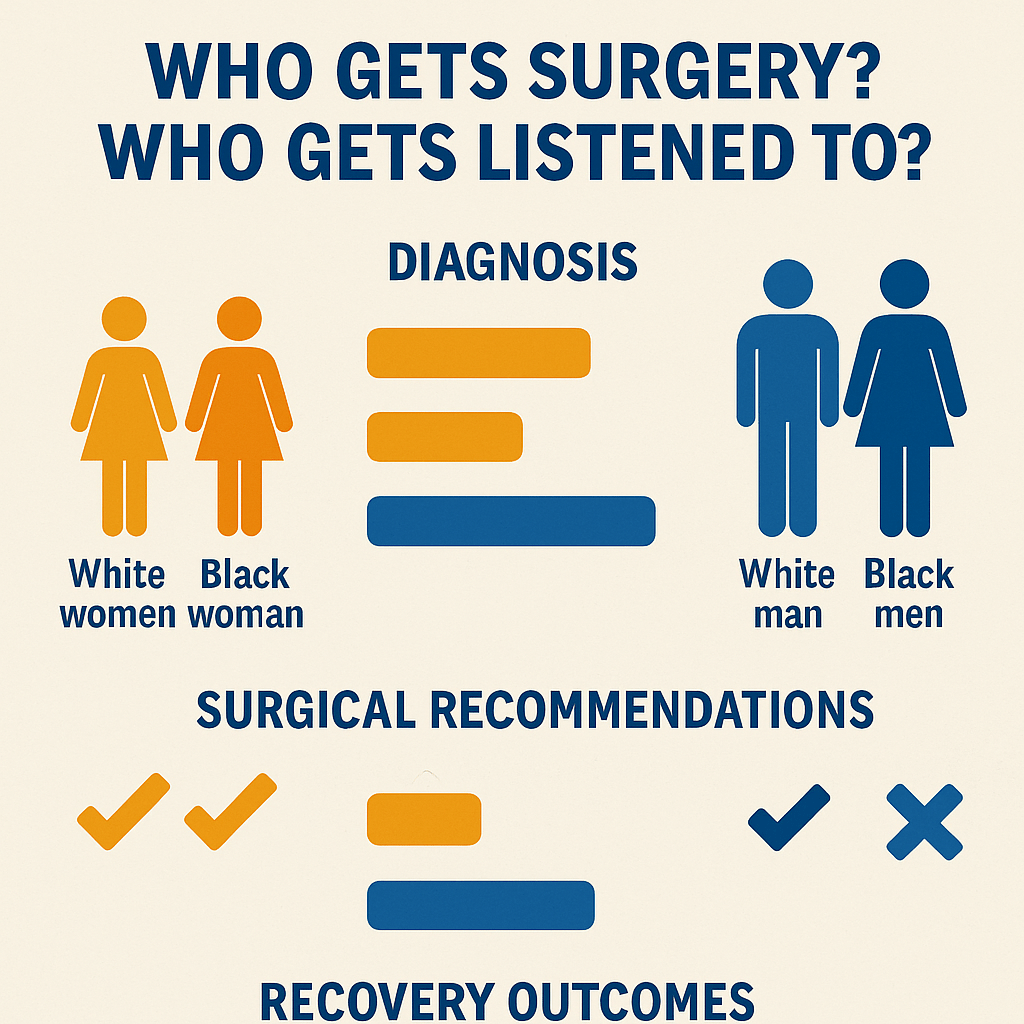
5 Reasons You Should Talk About Your Surgery (Loudly)
1. You’ll help someone else stop suffering in silence.
Your story could be the reason another woman gets checked out before it’s too late.
Being down for weeks doesn’t make you lazy. It makes you human. You just had your body cut open — rest is not optional.
Whether it was your choice or not, your surgery is part of your timeline — not a detour from it.
4. You get to define what “brave” looks like.
Hint: it’s not always smiling in the hospital bed. Sometimes it’s sobbing in the shower after taking the compression garment off.
5. You kill the shame.Secrecy thrives in shame.
Transparency kills it.
Healing Isn’t Linear — and Neither is This Conversation
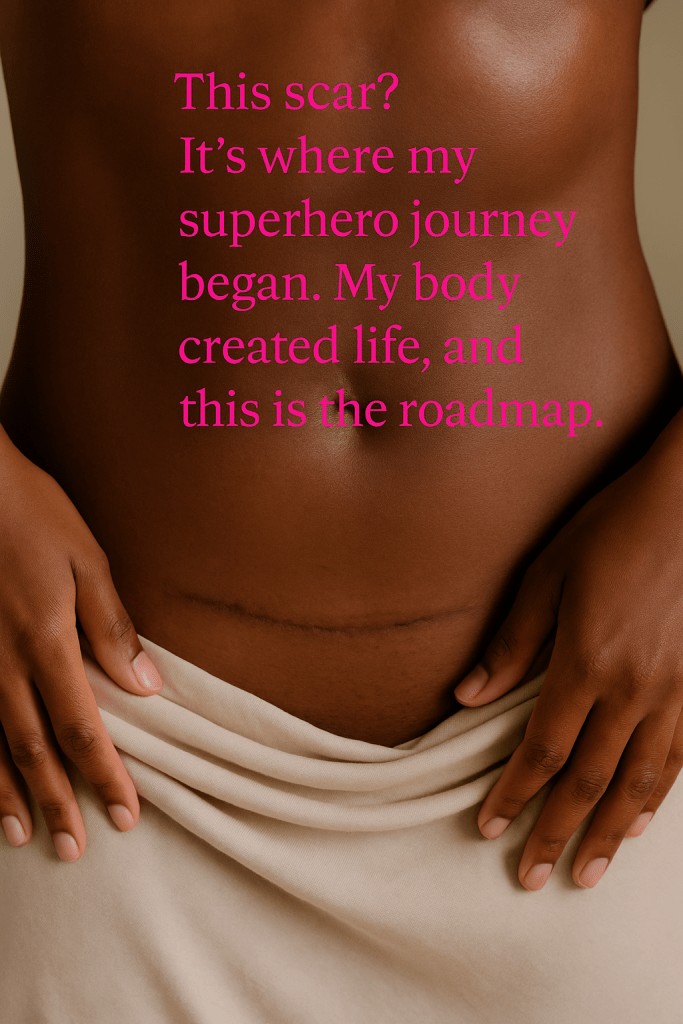

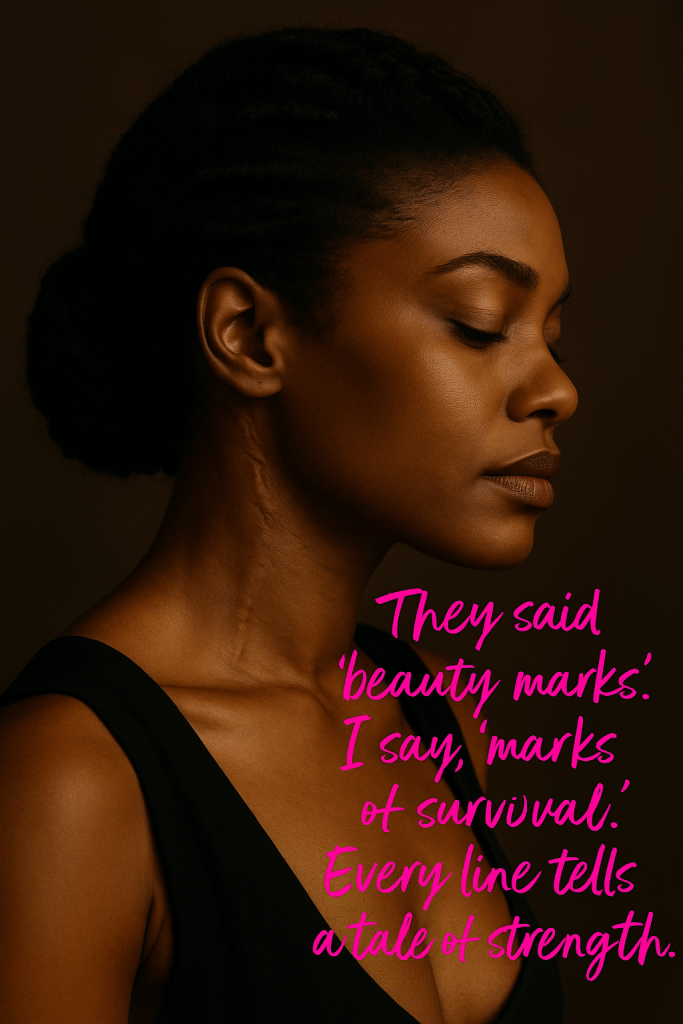
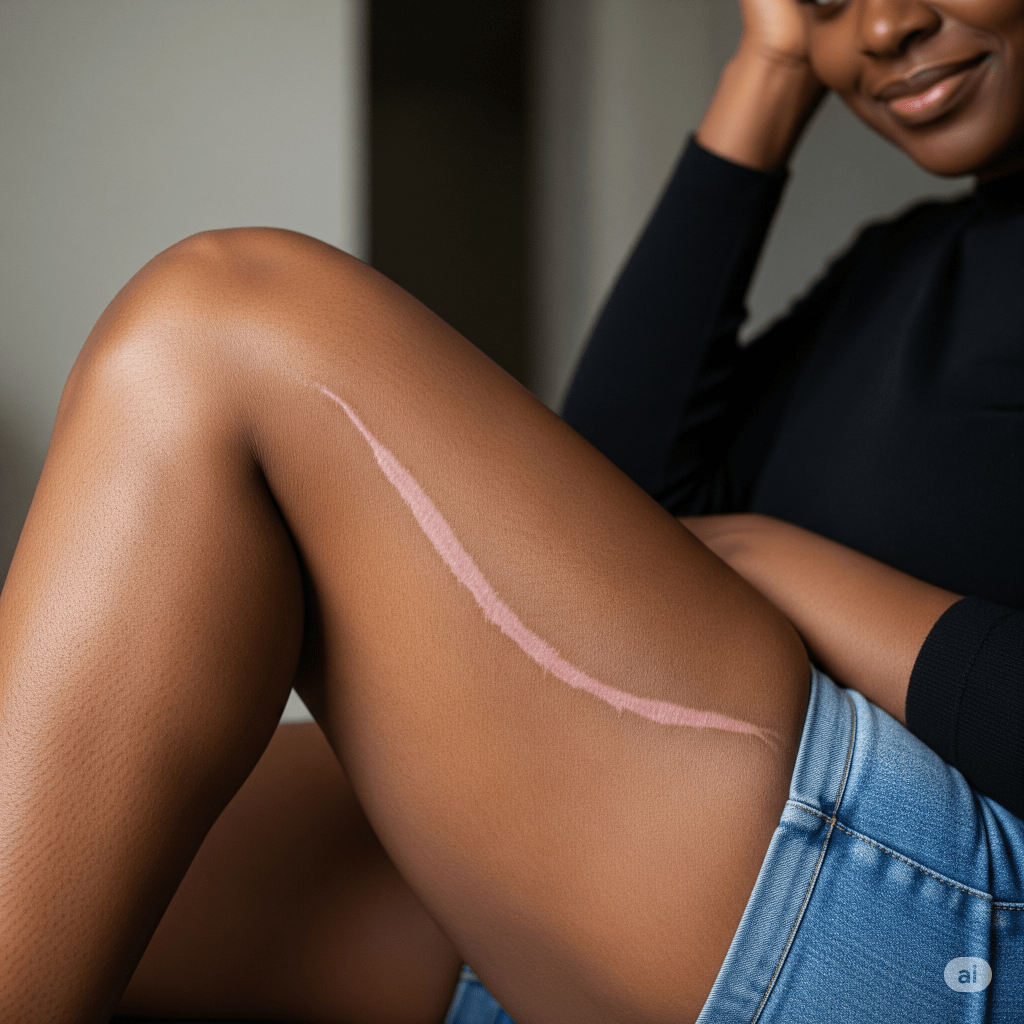

There are still things I don’t love: the scar that won’t fade, the medical debt I’m still fighting, the “wellness culture” that gaslights anyone who doesn’t bounce back in 6 days with green juice and affirmations.
But here’s what I do love:
✨ Having zero pain during my cycle
✨ Not canceling brunch because I bled through my outfit
✨ Feeling like my body is mine again

You don’t need to be proud of your surgery. You don’t have to be grateful for the trauma. But you do have permission to speak up, take up space, and say, “Yeah, I had surgery — and here’s what I wish someone had told me.”
Let’s Open the OR Files
So, let’s break the silence.
Have you ever had surgery? What for? How did it change you — physically, emotionally, mentally?
Drop it in the comments. DM it to your crew. Write it in your journal. Shout it into a microphone. Because the more we share, the more we heal — together.



 Fierce Millenial
Leave a comment