
How billionaires, bandwidth, and backroom deals are turning the final frontier into a corporate turf war—beaming internet to Earth and drama to the skies.
Welcome to the Space Race… 2.0: Internet Edition
Remember when outer space was the stuff of NASA, sci-fi flicks, and dreams about becoming an astronaut? Yeah, that fantasy has been hijacked by CEOs with Wi-Fi ambitions. Welcome to the age of the satellite internet boom—where the skies are no longer silent. They’re buzzing with corporate logos, overcrowded orbits, and more ego than a billionaire yacht party in Ibiza.
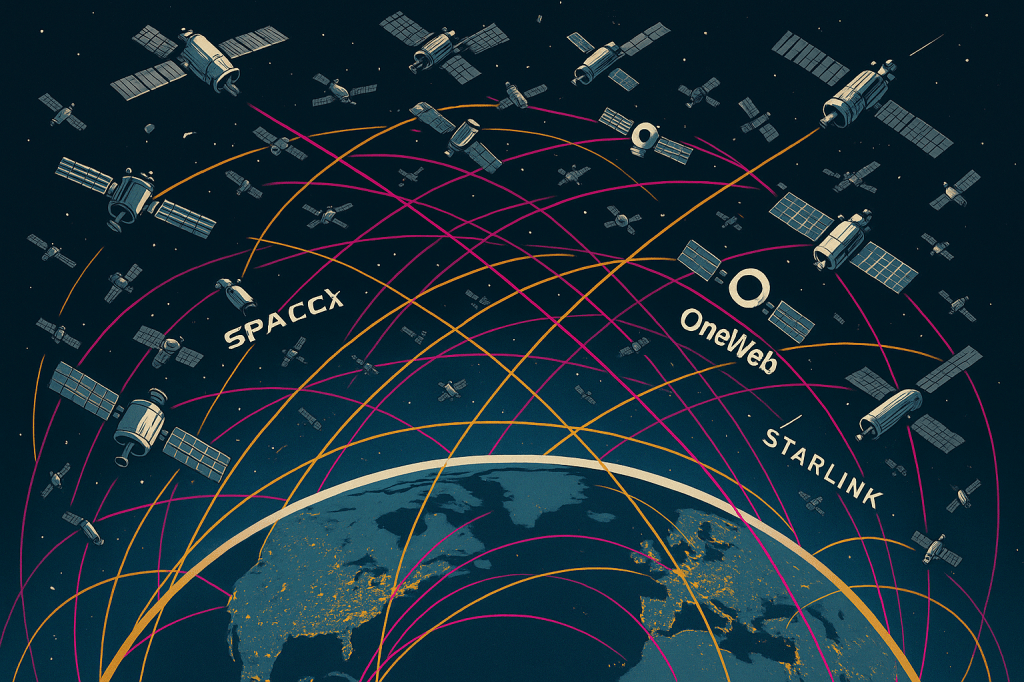
If you haven’t heard, companies like SpaceX (Starlink), Amazon (Project Kuiper), OneWeb, and Telesat are launching satellites like they’re handing out party flyers. And instead of just a few sleek satellites gracefully orbiting Earth? We’ve now got tens of thousands of them swarming the stratosphere—like a digital traffic jam you can’t “X” out of.
It’s not just about internet access anymore. It’s about global dominance, digital monopolies, and the kind of surveillance that makes your Ring camera look like child’s play.
Why Is Everyone Trying to Beam Us Internet From Space?
Simple: money, power, and market share. Not necessarily in that order.
Right now, nearly 3 billion people around the world still don’t have reliable internet. That’s a huge untapped customer base—especially in rural and underserved areas across Africa, Asia, and Latin America. These satellite providers promise to fix that digital divide by skipping the messy infrastructure (like laying down fiber optic cables) and instead raining down Wi-Fi from above.
Sounds good in theory. But it’s getting real messy in execution.
Space Is the New Real Estate—and It’s Already Overbooked
According to Rest of World, over 8,000 satellites are currently in low Earth orbit (LEO), with projections aiming for 100,000+ in the next decade. That’s not just wild—it’s dangerous. Space junk is now a serious hazard. One rogue bolt could knock out a billion-dollar satellite and take down entire networks.

Think of it like fighting for a seat at a crowded brunch spot—except you’re 300 miles above the Earth and one wrong move could cause a multi-million-dollar collision.
And don’t think the U.S. is playing nice with others. Most of these launches are from American companies, creating a digital imperialism that makes colonialism look like a clunky beta version.
The Big (and Petty) Players
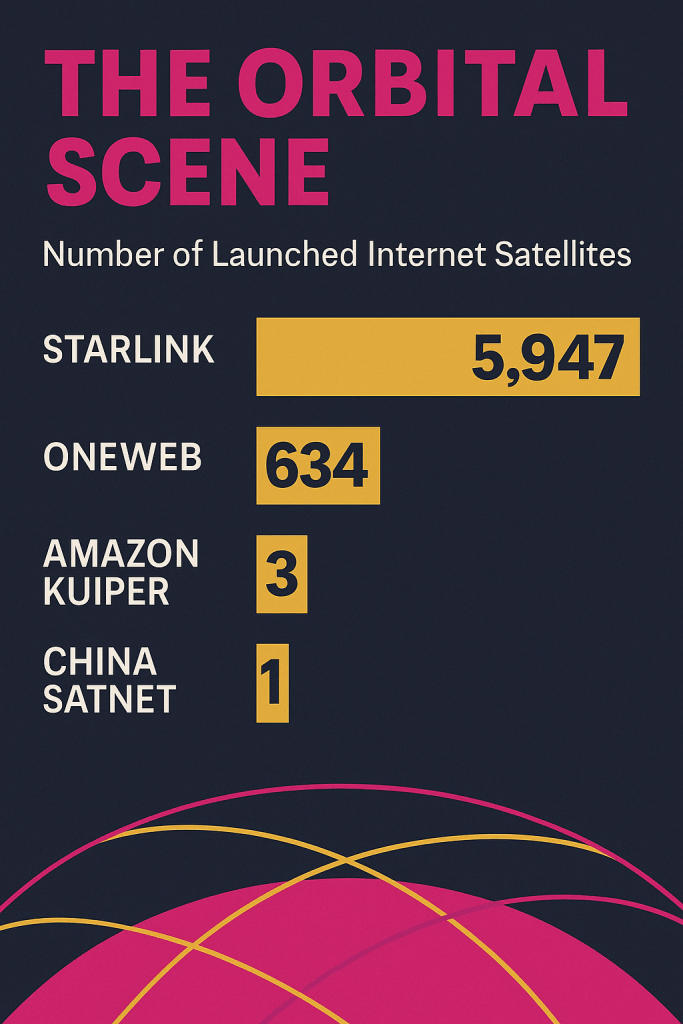
- Elon Musk’s Starlink: Currently the biggest name in the game. SpaceX already has more than 5,000 satellites in orbit, with plans to double that. Musk says it’s all about internet access. But between the military contracts and data mining potential? Let’s just say he’s playing chess while we’re all still looking for the Wi-Fi password.
- Amazon’s Kuiper: Coming in hot with 3,200 satellites planned. Jeff Bezos wants a piece of the pie, and you best believe he’s not just in it for rural broadband. Kuiper aims to sync with AWS (Amazon Web Services), turning the cloud into literal clouds.
- OneWeb: UK-based and partially owned by the British government, it was almost dead in 2020 before being resurrected through bailouts. Now it’s back with over 600 satellites—and a grudge.
- China and Russia: Also building their own constellations, though with fewer details shared. But trust, they’re watching and launching.
So… Who Regulates All This?
Honestly? No one is fully in charge. The International Telecommunication Union (ITU) technically coordinates satellite spectrum, but enforcement is flimsy. It’s a little like saying your Airbnb host “trusts you” not to throw a party. There are “rules,” but who’s really checking?

And when you have private companies launching satellites faster than governments can react, accountability goes out the airlock. If two satellites crash and take down a communications network? Who’s liable? Who pays? Who fixes it?
Crickets.
The Digital Divide Is Real. So Are the Trade-Offs.
Let’s not sugarcoat it: better internet access in underserved areas is a good thing. If satellite internet actually lives up to the hype, it could mean better education, job opportunities, and medical access for people who’ve historically been left offline.
But here’s the catch: this isn’t some nonprofit passion project. These companies want your data, your dollars, and your dependency. And when the same billionaire bros who don’t believe in paying taxes are the ones controlling your connection to the world? That’s not access—it’s vulnerability.
Space Pollution Is a Thing, and It’s Getting Ugly
Each new satellite adds to the clutter. And when they fail or go offline, they don’t just float off peacefully—they become dangerous, high-speed space debris.
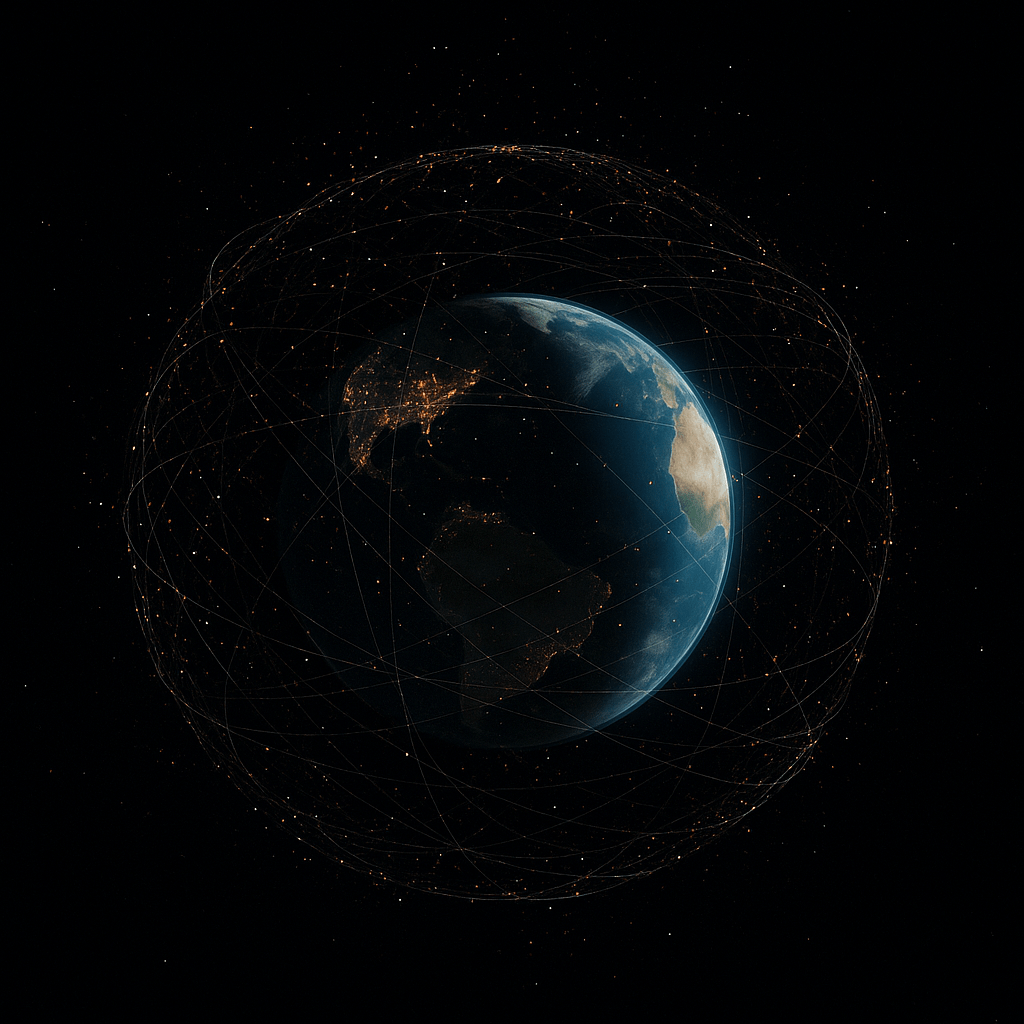
NASA calls it the Kessler Syndrome: too much stuff in orbit could trigger a chain reaction of collisions, turning space into a floating scrapyard.
Oh, and let’s not forget the astronomical light pollution affecting scientists and stargazers alike. Those bright streaks you see in the sky now? That’s not a shooting star—it’s a Starlink satellite train doing the digital conga.
What This Means for Us Earthlings
Here’s where it gets personal. Whether you’re trying to work remotely from a cabin in the woods or binge-watch reality TV on a spotty connection, the promise of satellite internet could mean more freedom and access.
But it also means trusting your digital life to unregulated tech empires operating in the vacuum of space. No pressure.
This isn’t just about tech. It’s about equity. Infrastructure. Surveillance. Environmental responsibility. And whether we’re okay with our skies being monetized pixel by pixel.

TL;DR – The Final Frontier Is Full
- The satellite internet industry is booming and chaotic.
- SpaceX, Amazon, and others are flooding low Earth orbit with thousands of satellites.
- It could help underserved communities—but it comes with serious baggage: surveillance, space junk, and unchecked power.
- There’s little regulation, and a lot of risk.
- This isn’t just a tech issue—it’s a social justice one.
Fierce Millennial’s Bottom Line
We’re all for closing the digital divide—but not if it means opening the door to unchecked power grabs, environmental damage, and global inequality 2.0. Space isn’t just for billionaires with rocket fetishes. It belongs to all of us. And if the skies are going to get crowded, we need to be loud about how they’re used.
Let’s not let the future of the internet be decided in boardrooms orbiting above our heads.




 Fierce Millenial
Leave a comment