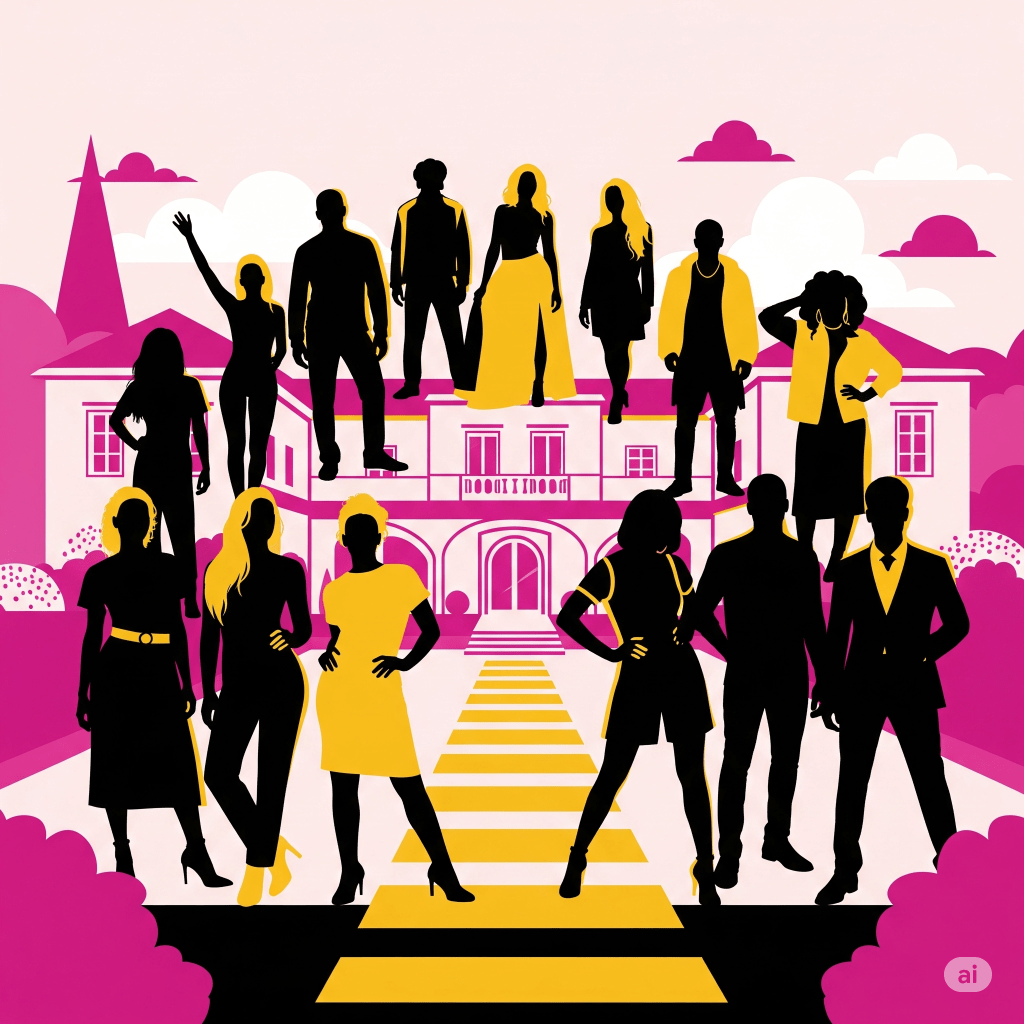
Let’s get into something that’s been simmering on the pop culture stove and spilling over into real-life conversations: the persistent, undeniable racial bias in dating, especially as it’s put on full, uncomfortable display in the worlds favorite guilty pleasure, ‘Love Island.’ If you’ve been tuning in, you’ve likely felt that familiar mix of drama, desire, and… a creeping sense of déjà vu when it comes to who’s consistently getting picked last, if at all.
This isn’t about throwing shade; it’s about shining a brilliant, unfiltered light on a dynamic that’s been playing out for far too long, both on our screens and in our streets. We’re talking about the silent, yet thunderous, conversation around racial bias, and how shows like ‘Love Island’ – for all their sun-drenched, poolside allure – serve as an unwitting, unscripted mirror to some of society’s uncomfortable truths.
The Island’s Unwritten Rules: When Black Women Get the Raw Deal
From the shores of the UK to the sunny sands of the US, ‘Love Island’ casts a wide net for “singles looking for love.” Yet, season after season, a pattern emerges that’s anything but lovely, particularly for Black female contestants. Fans and critics alike have meticulously documented instances where Black women are consistently overlooked in initial couplings, often left as the last choice, or are disproportionately among the first to be “dumped from the villa” (Source: AP News Article).. It took a staggering eleven seasons of ‘Love Island’ UK before a darker-complexioned Black woman finally claimed the winner’s title. Let that sink in. Eleven seasons.
Think about the recent buzz-worthy moment involving 23-year-old Alima Gagigo, a Black woman on ‘Love Island’ UK. When she chose to couple up with 26-year-old Blu Chegini, a white man, his immediate, blunt response was, “I’ll be honest, on paper, you’re not my type.” Her knowing, almost resigned reply of “Of course” spoke volumes louder than any dramatic confrontation could. While there’s no official confirmation that his remark was racially motivated, the exchange undeniably resonated with an audience all too familiar with the subtle, and not-so-subtle, biases at play. It’s a recurring narrative: suitors consistently bypassing Black female contestants when a fairer-skinned option is available. This isn’t just “reality TV drama”; it’s a direct reflection of real-world dating hierarchies.

Beyond the Villa: This Ain’t Just an Island Problem
While ‘Love Island’ has become a recent lightning rod, this isn’t an isolated incident confined to one show. This is a systemic issue woven into the fabric of reality dating television. Take a look at shows like ‘The Bachelor,’ ‘Married at First Sight,’ and even ‘Love Is Blind.’ Despite promises of diverse casting, the narratives often default to centering thin, conventionally attractive, and predominantly white contestants (Source: Breakthrough U.S. Article).
For years, ‘The Bachelor’ franchise faced public outcry and even lawsuits over its lack of racial diversity, culminating in a promise to address the “lack of representation of people of color.” We saw Matt James appointed as the first Black Bachelor. Yet, even with these efforts, the results are mixed. While more people of color are being cast, the shows often struggle with how to authentically portray them. Black women, in particular, have been historically pigeonholed into tired, harmful archetypes – the “Jezebel,” the “Mammy,” the “Sapphire” – perpetuating stereotypes that are damaging and frankly, creatively lazy (Source: T A P E Collective Article). When Black women on these shows step outside these narrow, pre-assigned boxes, they are frequently “axed” or silenced, their genuine stories and emotions policed and misrepresented.

The Deep Dive: Why It Cuts So Deep
This isn’t just about who gets a rose or a final coupling. This is about validating deeply ingrained societal biases. When dating shows consistently portray Black women as less desirable, less chosen, or less worthy of a fairytale romance, it reinforces dangerous perceptions. It’s not just a subtle snub; it’s a structural feature that often validates racially ignorant depictions, implicitly elevating white participants while positioning people of color, particularly women, as inferior (Source: Simon Fraser University Blog).
The problem is multi-layered. There’s the overt bias, where Black women are visibly marginalized. Then there’s the insidious effect of colorism, which further complicates the dating hierarchy, often placing darker-skinned Black women at an even greater disadvantage. Their journeys on these shows are frequently framed as internal struggles, rather than genuine pursuits of romantic partnership. Their love stories, if they even materialize, are often sidelined to make way for the more “conventional” (read: white) romantic narratives. This isn’t just a slight; it’s a direct assault on the confidence and perceived desirability of Black women everywhere (Source: Pacific Standard Article).
It’s a reflection of real-world biases, where Black women face unique challenges in the dating landscape, often battling against stereotypes and preconceived notions. These shows, with their supposed “reality,” simply amplify these existing prejudices, making it seem normal, acceptable, or even expected.
A Fierce Call to Action: Demanding Better, Deserving More
So, what’s the move? We, as consumers, viewers, and fierce advocates for ourselves and our community, have power. We can’t just shrug off these patterns as “just TV.” We must demand better.
- Demand Authentic Representation: It’s not enough to just cast Black women; they must be authentically represented. Their stories should be explored with nuance, their personalities celebrated, and their romantic journeys treated with the same respect and investment as any other contestant. This means moving beyond tokenism and actively working to dismantle tired tropes.
- Accountability from Producers: Production companies and networks need to take genuine responsibility. This means eliminating racist, homophobic, and sexist tropes from their narratives. It means providing ongoing training and therapy for cast and crew to ensure a physically and emotionally safe environment for all identities (Source: Crowd DNA Article). This isn’t about “colorblind casting” – which often just means ignoring race – but about having meaningful, impactful conversations about race on screen.
- Support Shows That Get It Right (or Try To): While imperfect, some shows, like certain seasons of ‘Love Is Blind,’ have attempted to engage with conversations about race in a way that is both impactful and entertaining. Supporting these efforts sends a clear message to the industry.
- Continue the Conversation: We have to keep talking about this. In our group chats, on our social feeds, at our brunch tables. The more we vocalize our observations and frustrations, the harder it becomes for these biases to be ignored.
This conversation, ignited by the dazzling, yet flawed, world of ‘Love Island,’ isn’t just about a dating show. It’s about challenging the narratives society tells us about desirability, dismantling systemic biases, and celebrating the multifaceted beauty and worth of Black women in every sphere, including love. Our worth isn’t determined by who picks us in a coupling ceremony; it’s inherent, undeniable, and utterly fierce.
Our Love Story, Our Rules
The “Love Island” phenomenon has, inadvertently, given us a powerful platform to discuss the enduring issue of racial bias in dating. For Black women, these conversations are not new, but their amplification on such a popular global stage serves as a crucial reminder of the work that still needs to be done. We are intelligent, beautiful, and absolutely deserving of love that recognizes and celebrates us, without exception or compromise. Let’s keep pushing, keep demanding, and keep shining, because our love stories are too powerful, too vibrant, and too essential to be dimmed by anyone’s biases.

 Fierce Millenial
Leave a comment