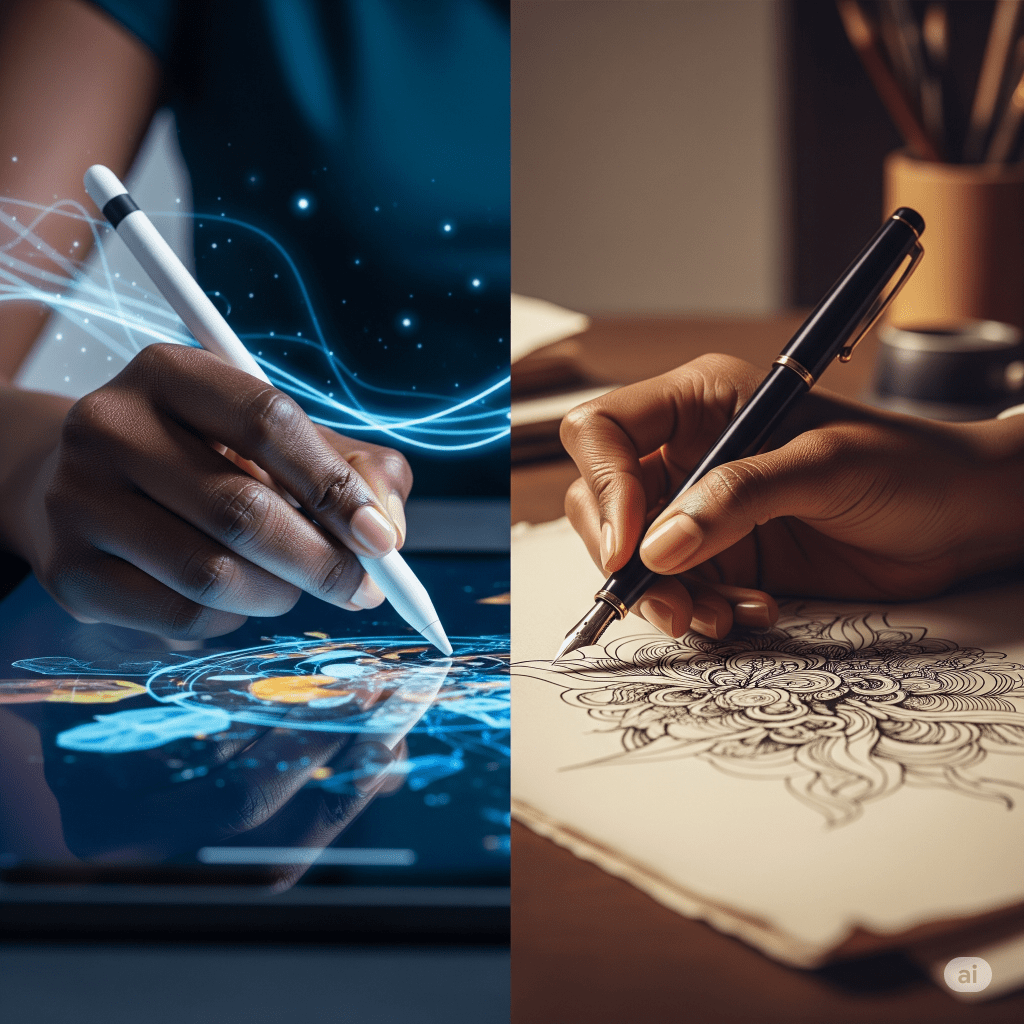
We’ve traded our notebooks for Notes apps and our pens for styluses. But in our rush to embrace the digital future, are we losing a vital part of ourselves? Let’s get into it.
Remember the feeling of a fresh, new notebook? The crisp, clean pages just begging to be filled with your thoughts, your dreams, your grocery lists. The satisfaction of a pen gliding smoothly across the paper, the ink flowing like a river of your consciousness. There was a certain magic to it, a personal connection to the words you were forming. Now, let’s be real: when was the last time you wrote anything longer than a sticky note by hand?
If you’re like most of us, your life is a flurry of keystrokes, taps, and swipes. Our thoughts are dictated to our phones, our to-do lists are managed by apps, and our love letters are sent as texts, complete with emojis to convey the emotions our words can’t quite capture. We are living in a digital world, and handwriting, it seems, is becoming a lost art. But is this just the natural evolution of communication, or are we losing something more profound in our quest for convenience and speed?
The Digital Deluge: A Hostile Takeover
Let’s not be naive. The decline of handwriting has been a long time coming. For decades, schools have been phasing out cursive, and the pandemic accelerated our reliance on digital tools for everything from education to work to socializing. According to a study by Schofield & Sims, a staggering 83% of teachers reported that the pandemic negatively impacted their students’ handwriting. And it’s not just the kids. A National Literacy Trust survey found that more than a third of children rarely or never write by hand in their spare time.
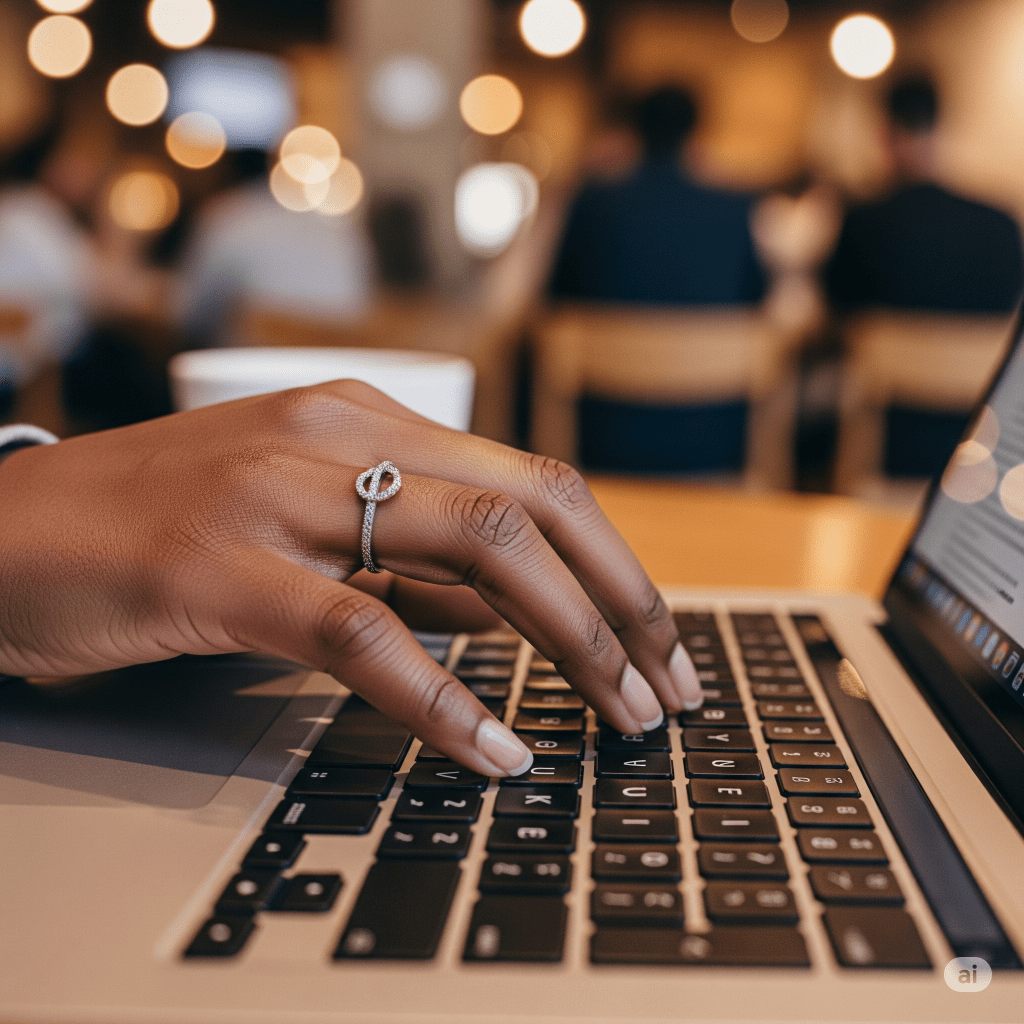
We’ve become a society of typists, our fingers flying across keyboards at lightning speed. And why not? It’s efficient. It’s convenient. You can edit, delete, and rearrange your thoughts with a few clicks. But in our rush to embrace the digital, we’ve started to forget the power of the pen.
Your Brain on Pen and Paper
Here’s where things get interesting. The act of writing by hand is more than just a quaint, old-fashioned habit. It’s a powerful tool for learning, memory, and creativity. When you write something by hand, you’re engaging your brain in a way that typing simply can’t replicate.
Studies have shown that students who take notes by hand have a better understanding of the material than those who type their notes. Why? Because handwriting is slower. It forces you to process the information, to summarize it in your own words, and to make connections between ideas. Typing, on the other hand, often leads to mindless transcription, where you’re simply recording words without truly absorbing their meaning.
But it’s not just about academics. Writing by hand can be a form of mindfulness, a way to slow down and connect with your thoughts on a deeper level. The physical act of forming letters can be meditative, a way to ground yourself in the present moment. And let’s not forget the creative benefits. Have you ever had a brilliant idea while doodling in a notebook? There’s a reason for that. The freedom of a blank page allows your mind to wander, to explore, to make unexpected connections.
The Resistance: A Rebellion in Ink
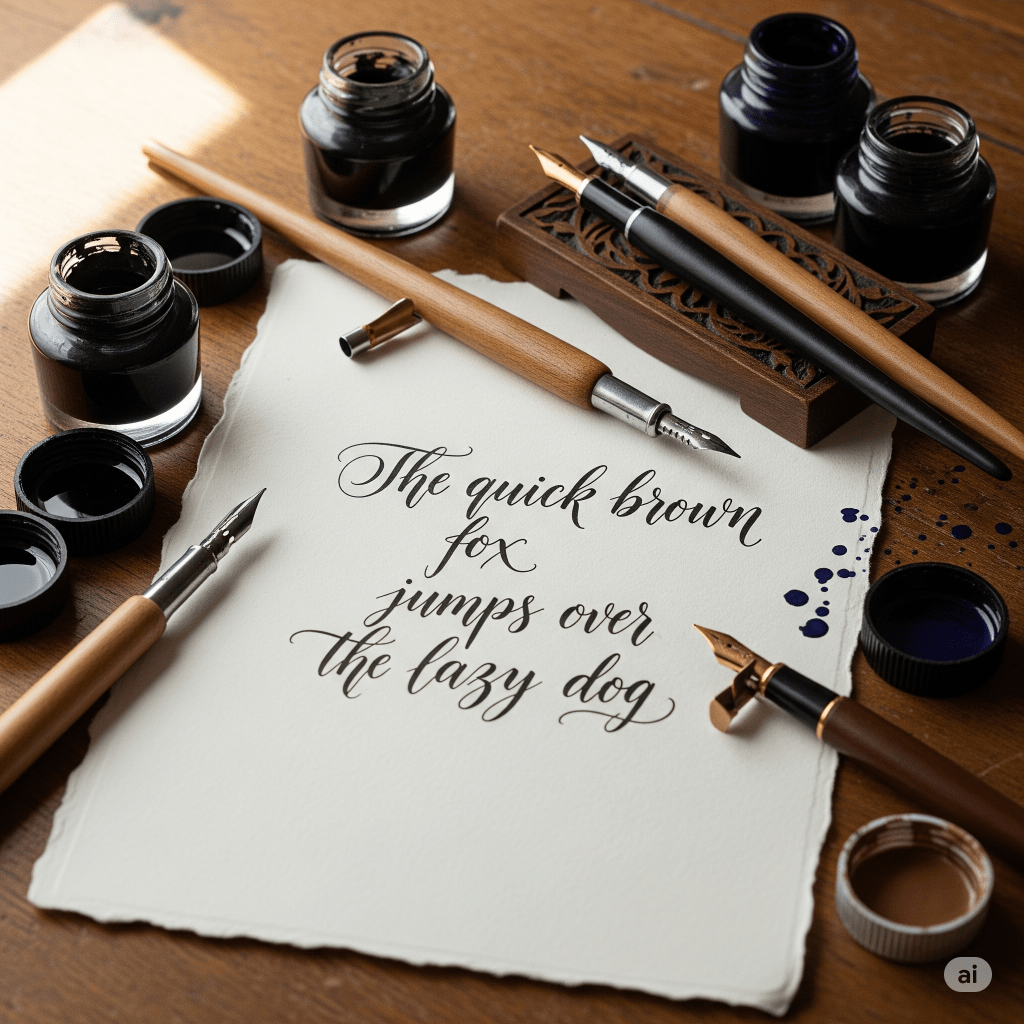
Just when it seems like handwriting is on its last legs, a funny thing has happened: it’s become cool again. In a world of sterile, uniform fonts, there’s a growing appreciation for the beauty and personality of a handwritten script. Calligraphy and hand-lettering have exploded in popularity, with people flocking to workshops and online tutorials to learn the art of beautiful writing.
This isn’t just about nostalgia. It’s a rebellion against the digital homogeneity of modern life. It’s a way to infuse our communication with a sense of personality, of artistry, of humanity. A handwritten note, in a sea of emails and texts, is a powerful statement. It says, “I took the time. I made the effort. This is for you.”
Finding Your Flow: The Best of Both Worlds
So, what’s the takeaway here? Is it time to ditch our devices and go back to a life of parchment and quills? Not exactly. The digital world is here to stay, and there’s no denying its benefits. But that doesn’t mean we have to completely abandon the analog.
The key is to find a balance. To recognize that different tools are right for different tasks. Use your laptop for work, for writing long-form articles, for keeping your life organized. But don’t forget the power of the pen. Keep a journal. Write a letter to a friend. Make a to-do list on a piece of paper. You might be surprised at how it makes you feel.
The end of handwriting doesn’t have to be a tragedy. It can be an opportunity. An opportunity to be more intentional about how we communicate, how we learn, and how we connect with ourselves and others. So go ahead, pick up a pen. Your brain will thank you for it.



 Fierce Millenial
Leave a comment