

Tired of toxic bosses, stagnant paychecks, and corporate gaslighting, a new wave of workers isn’t just resigning—they’re making an exit statement you won’t forget.
The Era of the Quiet Quit Is Over—Enter the Revenge Quitters
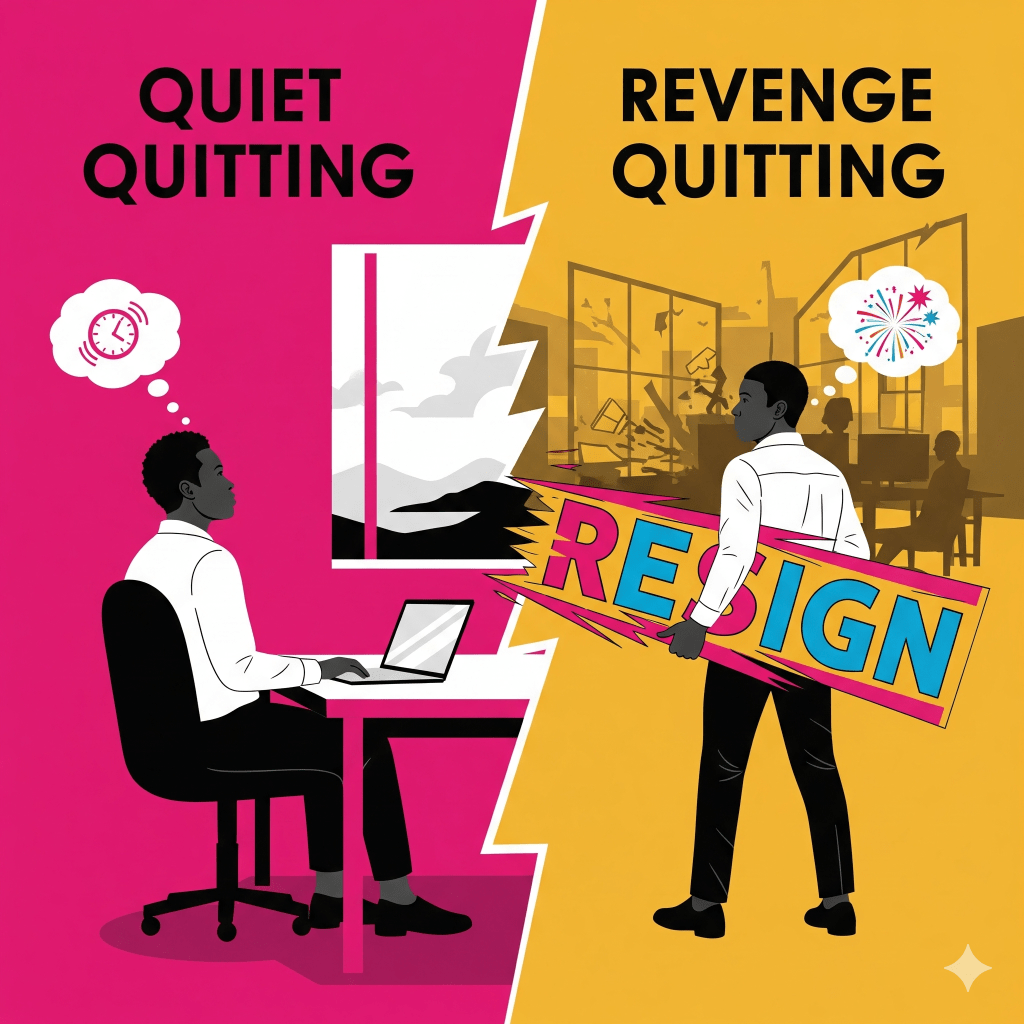
For the last couple of years, “quiet quitting” had its moment. You know, that passive-aggressive rebellion where employees clocked in, did the bare minimum, and preserved their sanity instead of sacrificing it to the corporate grind. It was cute while it lasted. But now, the vibe has shifted. People are no longer content with fading into the background. They’re reclaiming their voices, their dignity, and their boundaries—loudly. Welcome to the era of the revenge quitter.
According to The Guardian, employees are ditching toxic work environments in dramatic fashion: resignation letters laced with receipts, farewell emails copied to HR and half the company, or even TikTok videos broadcasting their final goodbyes. It’s less about burning bridges and more about torching the gaslighting culture that made them miserable in the first place.
Why Revenge Quitting Is Rising
1. Toxic Workplaces Got Too Comfortable
Let’s be honest—corporate America thrived for decades on employees tolerating nonsense. From thinly veiled racism and sexism to overwork disguised as “team spirit,” toxic management practices became normalized. Millennials and Gen X women especially have carried the brunt, juggling glass ceilings with family responsibilities while being told to “be grateful for the opportunity.” Enough.
2. The Pandemic Flipped the Script
Remote work revealed just how much unnecessary office culture was wasting everyone’s time. If you could handle projects in sweatpants, why on earth would you commute two hours just to sit in a cubicle under fluorescent lights while your boss lurked? People tasted freedom, and they aren’t crawling back quietly.
Slack messages, Zoom recordings, email trails—workplace injustices now come with documented proof. Workers aren’t just leaving; they’re leaving with screenshots, receipts, and sometimes viral content that exposes bad employers to the world.
The Psychology of Revenge Quitting
Revenge quitting isn’t just about spite. It’s about narrative control. When you leave quietly, the company can spin the story however they want: She wasn’t a good fit. He couldn’t keep up with the pace. They just weren’t committed. But when you go out loud, you reclaim the narrative: I’m leaving because this place is toxic, exploitative, and not worth my talents.
Psychologists argue this is a healthy act of boundary-setting. Instead of internalizing burnout or letting mistreatment erode your confidence, you flip the script. It’s closure—loud closure.
Famous (and Infamous) Examples
- A software engineer resigned via a mass email outlining years of ignored complaints about workplace discrimination. The email went viral on LinkedIn.
- A Gen Z marketing specialist recorded her resignation on TikTok, complete with a soundtrack and a message: “I’m not quiet quitting, I’m loud thriving.”
- Even mid-level managers are joining in, publicly resigning during company-wide Zoom calls to highlight inequities.This isn’t pettiness. It’s activism.
Is Revenge Quitting Always the Best Move?
Let’s keep it real—revenge quitting feels amazing in the moment, but it’s not risk-free.
Here’s the breakdown:
Pros:
- You set boundaries loudly and publicly.
- You inspire others to demand better.
- You highlight systemic problems employers can’t sweep under the rug.

Cons:
- Future employers may view you as “difficult.”
- Legal repercussions if you expose too much confidential info.
- Burning bridges can sometimes backfire, especially in smaller industries.
Bottom line: revenge quitting should be intentional, not impulsive. Think less “Twitter rant after a bad day” and more “strategic mic drop with receipts.”
How to Quit Like a Pro (If You’re Feeling Revenge-y)
- Document Everything: Keep copies of shady emails, unpaid overtime logs, or inappropriate messages. Facts > feelings.
- Plan Your Exit: Secure a new job, line up your finances, and decide the platform for your exit (email, meeting, social media).
- Control the Narrative: Focus less on dragging individuals and more on calling out systemic issues.
- Use Humor, Not Hate: A witty resignation lands better than a bitter rant.
- Think Bigger: Your story could help others. Share resources, advice, or warnings in your goodbye.

The Bigger Picture
Revenge quitting isn’t just a workplace trend—it’s a cultural shift. Workers are tired of swallowing toxicity for the sake of a paycheck. They want dignity, respect, and recognition. If corporations won’t provide that, people are willing to walk away loudly, forcing industries to reckon with their outdated norms.
This matters especially for women of color, who are often pressured to “keep the peace” at the expense of their well-being. Revenge quitting disrupts that narrative. It says: I’m not disposable. I’m not your diversity hire. I’m not tolerating this anymore.
Final Word
Quiet quitting was survival. Revenge quitting is defiance. It’s a declaration that your mental health, self-worth, and career trajectory matter more than sticking it out in a place that drains you. And maybe, just maybe, if enough people keep leaving loudly, companies will finally learn what silence never taught them: respect your employees, or lose them—spectacularly.




 Fierce Millenial
Leave a comment