

Insecurity, social media, and a billion-dollar industry are pushing men into the operating room like never before.
The Rise of Male Plastic Surgery
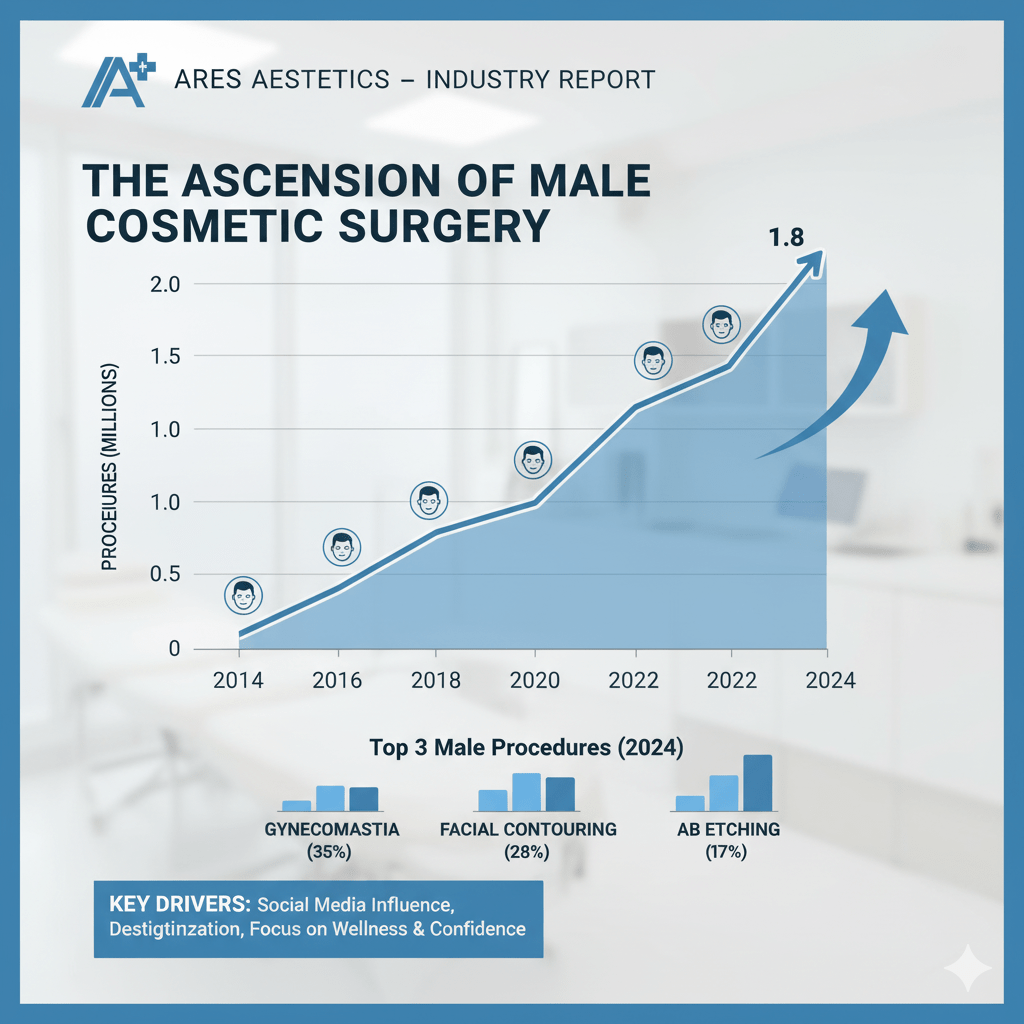
For decades, cosmetic surgery was marketed almost exclusively to women—facelifts, boob jobs, Brazilian butt lifts. Men were supposed to be above all that vanity. Wrinkles? Just rugged character lines. A dad bod? Just proof you had better things to do than count calories. But in 2025, that macho myth is unraveling. More men than ever are booking consultations with plastic surgeons, and not just for hair plugs.

According to recent reporting by STAT News, the number of men going under the knife is surging, fueled by body image issues, social media pressure, and a culture that finally admits men are just as insecure about aging as women. The global cosmetic surgery market is projected to hit nearly $80 billion by 2030, and men are now a huge slice of that pie.
Vanity Has No Gender
The idea that men shouldn’t care about their looks was always ridiculous. Humans are visual creatures. The pressure to look “youthful,” “fit,” and “successful” doesn’t magically skip over men just because they have Y chromosomes. If anything, men are just catching up to the decades-long barrage of impossible beauty standards women have been drowning in.
Men are now seeking:
- Eyelid surgery to look more awake and less “tired dad.”
- Liposuction to erase love handles.
- Facelifts and jawline sculpting for that superhero silhouette.
- Pectoral implants to fake gym dedication.
It’s not just celebrities and influencers. Surgeons report everyday guys—accountants, teachers, engineers—showing up with filtered selfies and TikTok inspiration boards.
Instagram Face… but Make It Male
You’ve heard of the infamous “Instagram Face” for women: high cheekbones, pillowy lips, and poreless skin. Now men have their own algorithm-approved ideal. Scroll through fitness influencers and male models, and you’ll see the formula: sharp jawline, symmetrical nose, youthful skin, and a lean-but-muscular body.
The kicker? Many of those guys are edited, filtered, or enhanced with surgical help. But try telling that to a 35-year-old staring at his thinning hairline in the bathroom mirror after another endless Zoom meeting. Suddenly, Botox doesn’t sound so vain—it sounds like survival.
The Social Media Trap
TikTok and Instagram didn’t invent male insecurity, but they supercharged it. Men scroll through endless highlight reels of “perfect” guys, then glance at their own crow’s feet or softening jawlines. Dating apps don’t help either. Profiles reward youthful looks and sculpted bodies, creating an unspoken hierarchy. Men who once laughed off skincare routines are now Googling “best fillers for men” at 2 a.m.
And let’s not ignore the workplace. Studies suggest attractive people—men included—are perceived as more competent and even earn more. In a cutthroat job market, “looking fresh” can feel like another unpaid requirement.
Masculinity vs. the Scalpel
Here’s the irony: men are turning to cosmetic surgery while still clinging to the idea that “real men don’t care about looks.” Surgeons even say male patients often want their procedures kept secret, hiding scars like evidence of weakness. Women have long been judged for “faking it,” but men are facing a double bind—criticized if they age naturally and mocked if they admit to a nip or tuck.
Plastic surgeons have taken note. Marketing now emphasizes subtlety for men: procedures that make them look “refreshed” rather than “done.” No trout pout, just a tighter jawline you can pretend came from hitting the Peloton harder.
The Risks Nobody Talks About
Before you start thinking surgery is the magic answer, let’s keep it real. Plastic surgery carries serious risks: infection, botched results, and long recovery times. Add in the financial toll—procedures can run anywhere from $5,000 to $30,000—and you’re talking about life-changing costs for results that may only last a few years.
There’s also the mental health factor. Surgery can fix a nose, but it can’t erase insecurity. Studies link cosmetic procedures to body dysmorphic disorder and anxiety, particularly if patients expect surgery to solve deeper self-esteem issues. That holds true for men just as much as women.

Why It Matters
This isn’t just about vanity. The surge in male cosmetic surgery is a mirror reflecting back our collective obsession with youth, beauty, and status. If men are finally admitting their insecurities, maybe that’s progress. But it also means society is tightening the screws on everyone, demanding a curated appearance that looks good on camera 24/7.
Instead of mocking men for “acting like women,” maybe the conversation should shift to dismantling the toxic beauty standards that trap all genders. Aging is not a failure, and perfection is an illusion—even with the best filters and fillers.



 Fierce Millenial
Leave a comment