
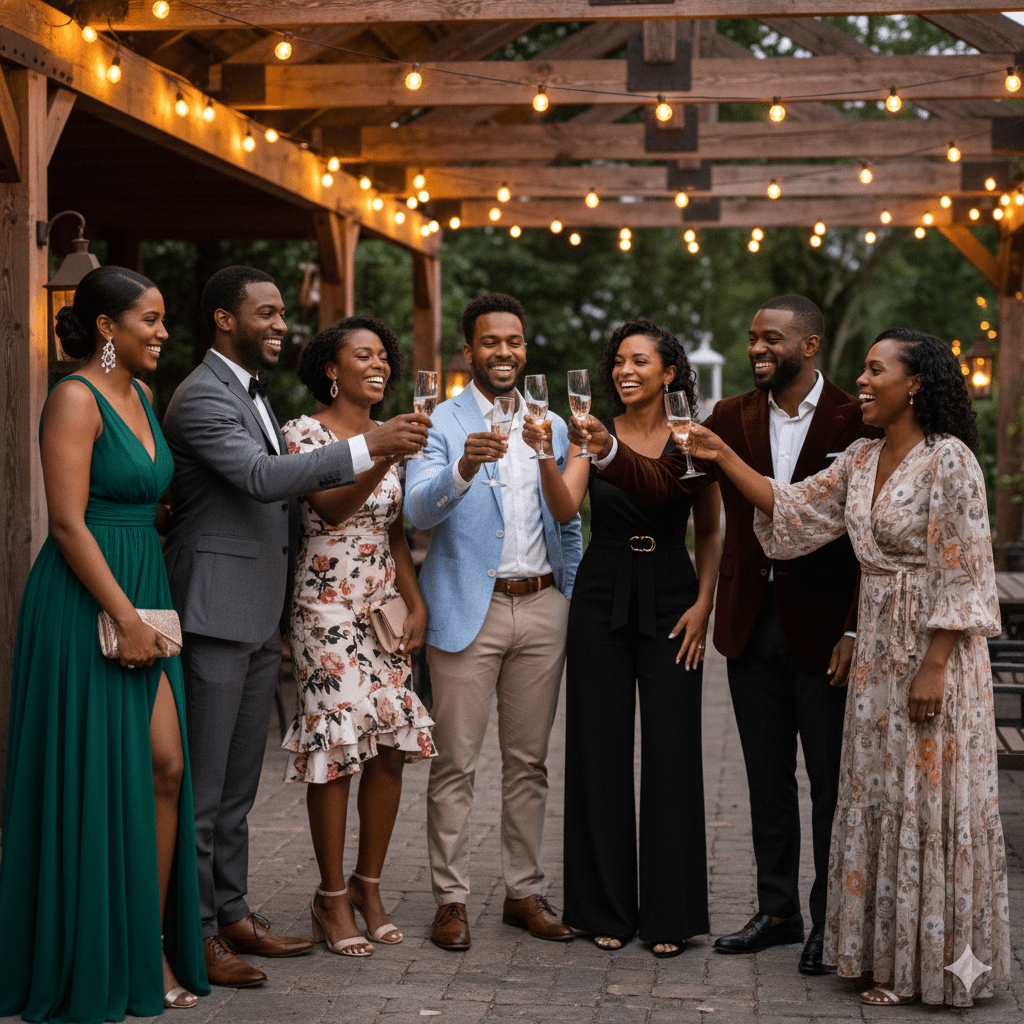
Because “beach formal” and “festive cocktail” should not require a PhD in decoding fashion.
There are two kinds of wedding invitations. The first is straightforward: date, time, location, RSVP card. The second is basically a cryptic riddle:
“Dress Code: Garden Chic with a Twist of Formality.”
Excuse me? Are we supposed to look like we walked out of a Vogue cover shoot… but also like we could prune roses at intermission? Weddings are joyful, but navigating dress codes has become its own stressful mini-Olympics. Let’s decode the madness so you don’t have to spiral at Nordstrom two days before your cousin’s big day.

This guide is your cheat sheet to wedding dress codes—what they actually mean, how not to overthink it, and a few style hacks that work no matter how extra the invite gets.
1. White Tie: The Royal Fantasy
Think: Oscars after-party meets Bridgerton.
For women: Full-length ballgown, dramatic jewelry, hair done, makeup polished. Gloves are technically “correct,” but unless you’re feeling dramatic, leave them at home.
For men: Tails, bow tie, white shirt, black patent shoes. Basically, 1800s aristocracy cosplay.
Reality check: Unless you’re friends with European royalty or the couple really loves tradition, this one almost never happens. If you do get invited to a white-tie wedding, congratulations—you’ve entered rare air.
2. Black Tie: The Classic “Fancy, But Chill”
This is the most common “fancy” wedding dress code. It’s meant to feel elevated but not suffocating.
For women: Floor-length gown is standard, but a chic midi or formal jumpsuit can also work. Heels or dressy flats are fair game.
For men: Tuxedo with bow tie. If you show up in a regular suit, make sure it’s really sharp—tailored, dark, and clean.
Pro tip: Go glam but not prom. If your outfit has sequins and feathers and a dramatic train, maybe scale it back unless you’re also performing at the reception.
3. Black Tie Optional: AKA the “We’re Polite, But We Still Expect You to Dress Up”
This is the wedding world’s version of, “We’re flexible, but don’t test us.”
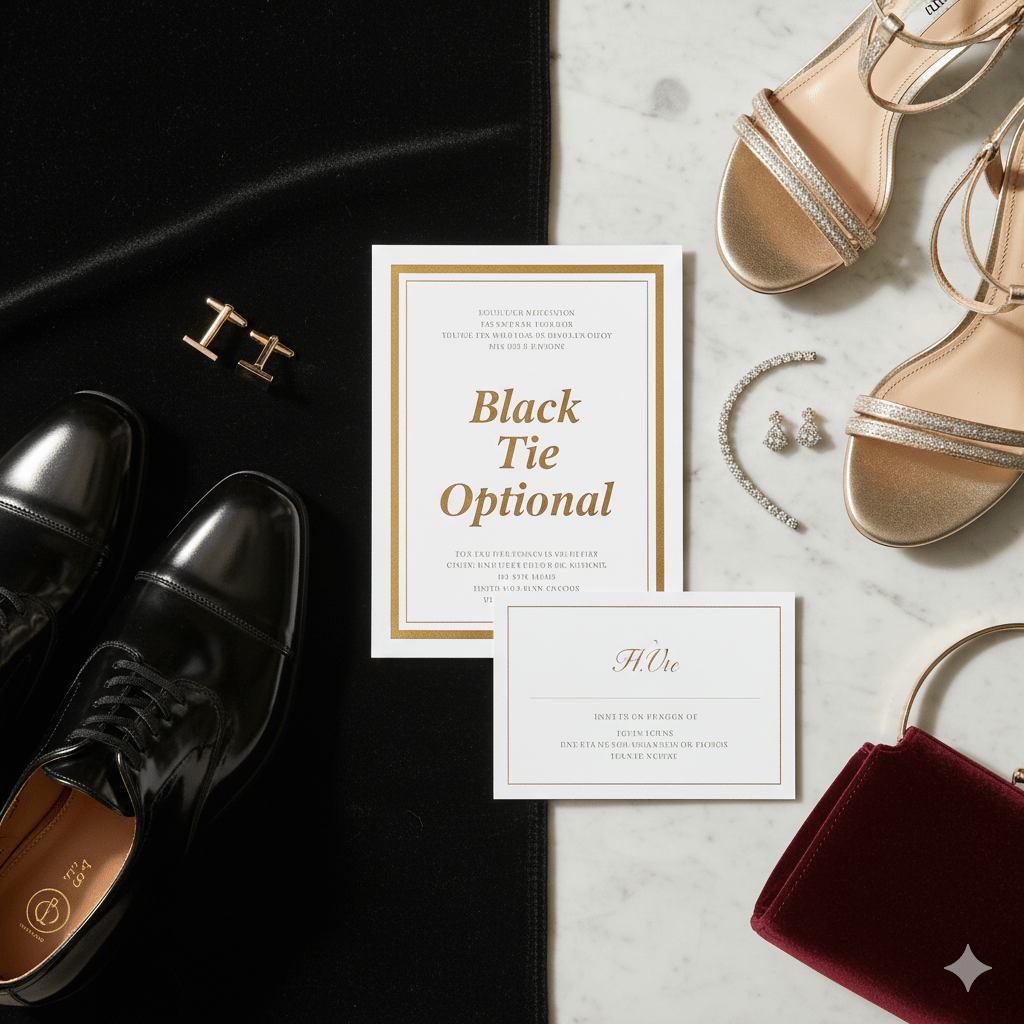
For women: Anything from black-tie rules applies. A fancy cocktail dress works, too.
For men: Dark suit with a tie, or a tux if you’re feeling it.
Translation: Don’t show up looking casual. Optional doesn’t mean jeans are suddenly acceptable.
4. Formal or Evening Attire: The Slightly Softer Black Tie
This one is sneaky. It’s not as rigid as black tie, but you still need to look like you’re attending a wedding and not a networking happy hour.
For women: Long gown, chic midi dress, or dressy jumpsuit. Think elegance without overdoing it.
For men: Dark suit, tie required. No tux necessary.
This is the code couples often pick when they want everyone to look elevated without scaring their guests into buying new wardrobes.
5. Cocktail Attire: The Crowd Favorite
When in doubt, this is usually what couples pick.
For women: Knee-length or midi dresses, fun but polished. Jumpsuits or chic separates also work.
For men: Suit and tie. You can play with color here more than in formal or black tie.
Mood check: Think of cocktail attire as “ready to dance without tripping on your hem.”
6. Semi-Formal or Dressy Casual: The Slippery Middle Ground
The most confusing code by far. It means: don’t be sloppy, but you don’t need to raid Rent the Runway either.
For women: Dresses, skirts, or tailored pants. Heels or nice flats.
For men: Suit and tie optional. Dress shirt and slacks are fine, but step it up with a blazer.
This code works best for daytime weddings. Just don’t assume “semi-formal” equals sundress and flip-flops.
7. Beach Formal: Sand Meets Chic
Tricky, because beach weddings are about balance—looking polished without sweating through your outfit.
For women: Flowy maxi dresses, wedges (sand + stilettos = disaster), breathable fabrics.
For men: Lightweight suits in linen or cotton. No jackets required if it’s sweltering. Tie optional.
Hack: Avoid heels that sink into sand and fabrics that show sweat. Nothing says romance like sweat stains under fairy lights.
8. Festive Attire: The Wild Card
This is the couple telling you: “We want color, personality, and maybe even sequins.”
For women: Bold prints, metallics, statement accessories. Have fun, but keep it wedding-appropriate.
For men: Suits in bright colors, funky ties, or statement blazers.
Mood check: Pretend you’re going to a stylish holiday party, but keep it chic.
9. Casual: The Sneaky One
“Casual” never really means casual. It means “dress nicely, but we’re pretending not to care.”
For women: Sundresses, skirts, jumpsuits, flats.
For men: Khakis, button-down shirts, loafers. Jeans only if the couple is very laid-back.
Pro tip: Even if the invite says “casual,” skip sneakers unless they’re sleek and intentional.
How to Survive Any Dress Code Without Losing Your Mind
- 1. Check the Venue: A “casual” barn wedding at sunset still requires more polish than a backyard barbecue.
- 2. Follow the Couple’s Vibe: If the invite design is luxe and gold-foiled, lean formal. If it’s playful with doodles, lean relaxed.3. Accessorize Smartly: Jewelry, shoes, and bags can push an outfit up or down the scale instantly.4. Respect the Moment: It’s the couple’s day. The least you can do is meet them halfway on dress code without rolling your eyes too hard.

Bottom Line
Wedding dress codes can feel annoying, but they’re not out to ruin your life. They’re just a couple’s way of setting the mood for the day. Whether it’s ballgown glam, cocktail cute, or beachy chic, you’ve now got the blueprint to decode it all without panic-shopping.
Show up, look great, celebrate love—and save the confusion for the dance floor when “Cha Cha Slide” inevitably plays.

 Fierce Millenial
Leave a comment