

It’s more than well-meaning clichés. Here’s how to truly be there for someone struggling with their mental health.
Let’s be real – depression is a serious beast. When a friend, a family member, or even a coworker is battling with it, those “you got this!” and “stay positive!” cheerleading vibes can actually make things worse.
It’s not that you don’t care; it’s easy to accidentally say the wrong thing when well-meaning support falls short. If someone you know is living with depression, showing up for them matters more than you realize.

What NOT to Say
Let’s get the obvious ones out of the way, shall we?
- “It’s all in your head.” No, duh. Depression is a medical condition, just like diabetes or a broken leg.
- “Just snap out of it!” If snapping out of it was possible, people wouldn’t need therapists or medication. Trust that your loved one would love to make that happen.
- “Think happy thoughts!” Toxic positivity much? Depression messes with a person’s emotions in ways that positive thinking simply can’t compete with.
- “But you have so much to be grateful for.” Depression doesn’t play by those rules; it distorts perception.Gratitude won’t heal it, although it can be a helpful coping tool later on.
- “So-and-so has it worse.” Don’t turn this into some weird suffering Olympics. Comparing experiences invalidates someone’s true feelings.
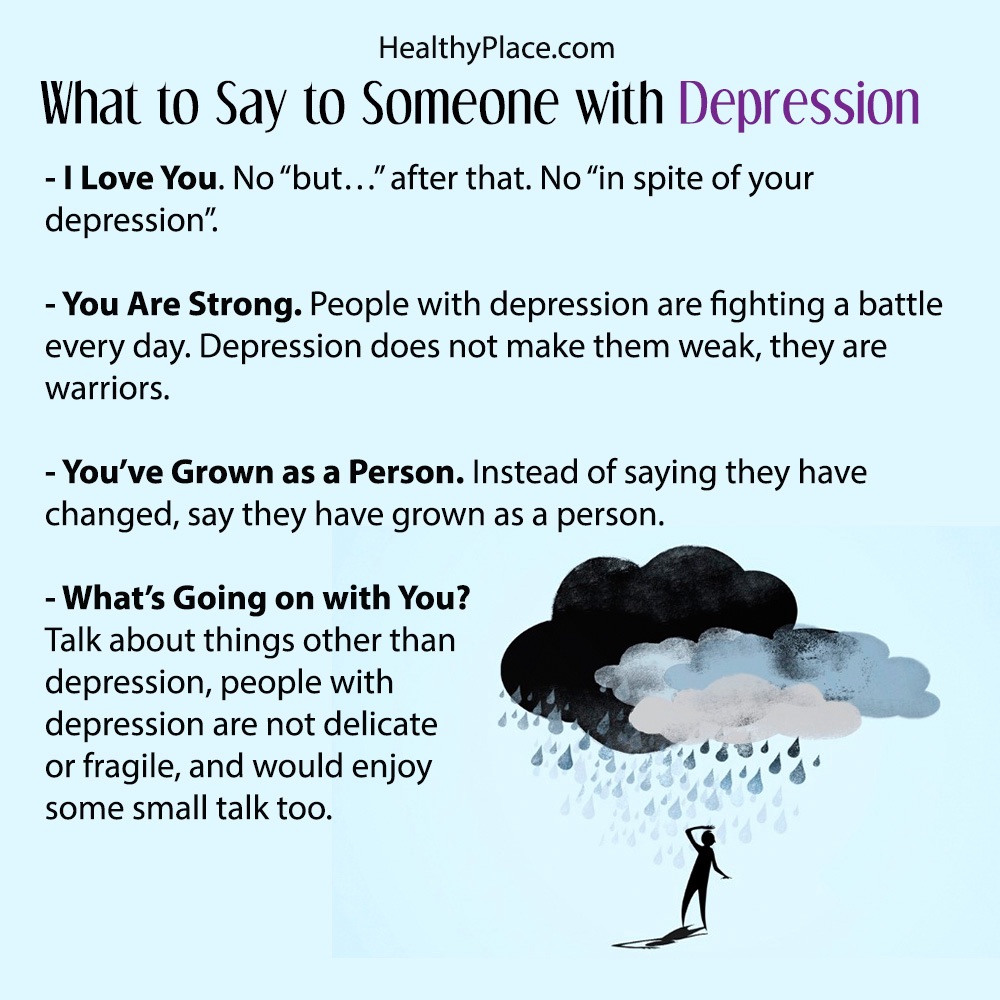
What TO Say (And Do)
Instead of those tired clichés, focus on things that validate their experience and let them know you’re in this with them:
- “I’m here for you.” – Simple and powerful. Sometimes showing up with no agenda is the best medicine.
- “I don’t know what to say, but I care.” – Honesty speaks volumes when the right words escape you.
- “It sounds like you’re having a really tough time.” – Validating their pain avoids minimizing their struggle.
- “What can I do to help right now?” – Let them guide you. It could be running errands, listening to them vent, or just sitting in silence together.
- “Have you considered talking to a therapist?” – If they haven’t sought help yet, gently plant the seed.
Beyond the Words
Actions mean everything – especially when talking gets tough. Here’s how to be a rockstar friend:
- Check in regularly. A simple text to say “Thinking of you” can be a lifeline some days.
- Offer practical help. Cooking a meal, helping with chores, or even walking their dog takes the pressure off when depression makes basic tasks feel impossible.
- Don’t take it personally. Depression can make people isolate themselves or say hurtful things. Remember, it’s the illness talking, not your friend.
- Educate yourself. Learn about depression. Understanding what your loved one faces shows you’re committed.

Important Resources
If you or someone you know is in crisis, don’t hesitate to reach out:
- 988 – Suicide & Crisis Lifeline
- Crisis Text Line – Text HOME to 741741
- National Alliance on Mental Illness (NAMI)





 Fierce Millenial
Leave a reply to Unpacking the Villa: Why ‘Love Island’ Is Still Stirring Up Crucial Conversations About Racial Bias in Dating – Fierce Millenial Cancel reply