

How do you waste the most time every day?
We’re Millennials. We remember dial-up, but we also navigate TikTok like pros (mostly). We’re juggling careers, side hustles, relationships, and the ever-present hum of societal expectations. We’re smart, we’re capable, and we’re constantly told to optimize, to hustle, to GRIND. But what if the biggest obstacle to our fierce ambitions isn’t a lack of drive, but a silent thief stealing our most valuable resource: time?
We’re not talking about those big, obvious time wasters like binge-watching an entire season of that questionable reality show (though, let’s be honest, we’ve all been there). We’re diving deep into the insidious, everyday habits that chip away at our productivity like tiny termites, leaving us wondering where the day went and why our to-do list looks longer than a CVS receipt.
So, buckle up, buttercup. We’re about to get uncomfortably honest about how we collectively manage to squander hours without even realizing it. Consider this your intervention, your wake-up call, delivered with the bold, edgy, and (hopefully) hilarious truth you’ve come to expect.
The Endless Scroll: Your Pocket-Sized Portal to Nowhere
Ah, social media. That glorious, double-edged sword. It connects us, informs us (sometimes), and provides endless entertainment. But let’s call it what it often is: a black hole of wasted time. How many times have you picked up your phone “just for a second” to check one notification, only to find yourself twenty minutes later deep in the rabbit hole of perfectly curated vacation photos of someone you vaguely knew in college?
It’s the endless scroll, the autoplaying videos, the constant refresh for the dopamine hit of a new like or comment. These platforms are designed to keep us engaged, and they are frighteningly effective. What starts as a quick peek can easily morph into an hour of passive consumption, leaving you feeling drained and further away from your actual goals.

The “Quick Question” That Turns into a Time Vortex
We all have that one colleague, friend, or family member. The one who pops up with a “quick question” that inevitably spirals into a 45-minute, tangential conversation that could have been an email (or, let’s be real, wasn’t even necessary in the first place). We’re not advocating for becoming hermits, but learning to politely but firmly manage these conversational vampires is crucial.
Setting boundaries around your time is not rude; it’s a form of self-respect. Learn to say things like, “I’m in the middle of something right now, can we schedule a brief chat later?” or “That sounds interesting, but I need to focus on this deadline. Maybe send me a quick summary?” Your time is valuable, don’t let others inadvertently (or intentionally) drain it away.
The Myth of Multitasking: Juggling Chainsaws (Blindfolded)
We’ve been sold this lie that multitasking is a superpower. Newsflash: for most of us, it’s a productivity killer disguised as efficiency. Trying to simultaneously answer emails, listen in on a meeting, and draft a report usually results in doing all three tasks poorly and taking significantly longer than if you tackled them one at a time with focused attention.
Our brains aren’t wired to effectively handle multiple complex tasks at once. Instead, we rapidly switch between them, leading to cognitive overload, increased errors, and a general feeling of being overwhelmed and unproductive. It’s time to ditch the multitasking myth and embrace the power of focused, single-tasking. You’ll be amazed at how much more you accomplish (and with less stress).
[Multitasking doesn’t work—here’s what does.]
The Perfectionism Paralysis: Aiming for Flawless and Achieving Nothing
As driven individuals, many of us strive for excellence. But there’s a fine line between striving for quality and getting stuck in the quicksand of perfectionism. How many brilliant ideas have languished in your mind because you were waiting for the “perfect” moment, the “perfect” resources, or for every single detail to be absolutely flawless before you even started?
Perfectionism can be a sneaky form of procrastination. Fear of failure or criticism can paralyze us, preventing us from taking action at all. Remember, done is often better than perfect. You can always iterate and improve, but you can’t improve what doesn’t exist. Give yourself permission to be imperfect, to launch, to create, and to learn along the way.
The “I’ll Just Do This One More Thing” Syndrome
You’ve finally wrapped up your main tasks for the day. You’re feeling good, almost ready to log off and enjoy your well-deserved downtime. But then… “Oh, I should probably just quickly respond to this one email.” And then, “While I’m at it, let me just check this one report.” Before you know it, another hour has vanished, and you’re feeling drained and resentful.
This “one more thing” syndrome is often fueled by a fear of leaving things unfinished or a desire to feel constantly productive. But it can lead to burnout and erode the boundaries between work and personal life. Learn to recognize when you’ve reached a natural stopping point and give yourself permission to step away. Those “one more things” can likely wait until tomorrow.
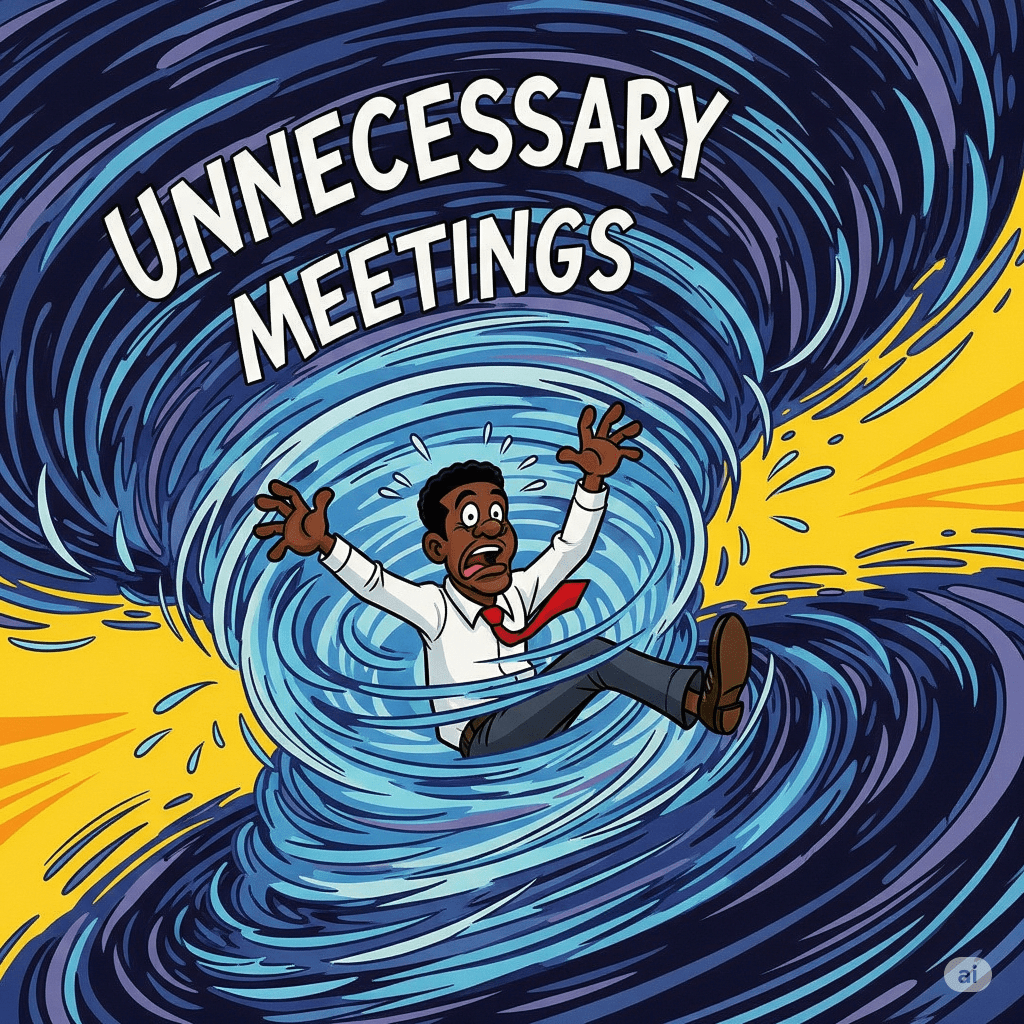
The Unnecessary Meetings and Email Chains: Information Overload and Time Drain
How many meetings have you sat through where your presence wasn’t truly required? How many email threads have clogged your inbox with endless “reply alls” that added zero value to your day? Unnecessary meetings and sprawling email chains are notorious time wasters in the professional world.
Be proactive about evaluating meeting invitations and suggesting alternative forms of communication when appropriate. Be ruthless with your inbox – unsubscribe from unnecessary newsletters, use filters, and aim for concise and actionable emails. Reclaim your calendar and your inbox; your sanity (and your productivity) will thank you.
[23 Email Management Best Practices and Tips]
The Failure to Plan (or Stick to the Plan): Wandering Aimlessly Through Your Day
Imagine trying to drive to a new destination without a map or GPS. You’d likely spend a lot of time going in circles and getting frustrated. The same principle applies to your daily tasks. Without a clear plan or to-do list, you’re more likely to drift between tasks, get distracted, and ultimately waste time on low-priority activities.
Take a few minutes at the beginning of each day (or the end of the previous day) to identify your key priorities and create a realistic plan. Break down larger tasks into smaller, manageable steps. And most importantly, try to stick to your plan. Of course, things will come up, but having a roadmap will help you stay focused and avoid getting lost in the weeds.

Reclaiming Your Time, Fiercely
Recognizing these time-wasting habits is the first step towards breaking free from their grip. It’s not about becoming a productivity robot; it’s about consciously choosing how you spend your most precious resource so you can dedicate it to the things that truly matter – your goals, your well-being, and your fierce ambitions.
Start small. Identify one or two areas where you know you’re consistently losing time and implement strategies to change those habits. Be patient with yourself; breaking old habits takes time and effort. But with awareness, intention, and a healthy dose of our signature bold determination, you can reclaim those lost minutes and hours and start living and working with more focus and intention.
What are your biggest time-wasting culprits? Let’s get the conversation started in the comments below!





 Fierce Millenial
Leave a comment