

Your phone is not the enemy. But what it does to a growing mind might make you rethink who’s really in charge.

Let’s be honest. We’re all a little addicted to our screens. Our phones are our lifelines, our news sources, our photo albums, our therapists, and our personal hype-women all in one. For us Xennials —that perfect blend of Gen X cynicism and Millennial tech fluency—this is just our reality. We remember a world without the internet, but we can’t imagine a life without it. We’ve seen the evolution of technology, and we’ve adapted with the grace of a gazelle in stilettos.
But then, we became mothers. Or aunts. Or godparents. And suddenly, that little rectangle in our hands isn’t just about us anymore. It’s a tool, a crutch, and a Pandora’s box of digital dilemmas. We’ve all done it: handed a toddler a tablet to get five minutes of peace, or let the kids zone out on YouTube so we can get dinner on the table. No judgment here. But a deep dive into the science of what all this screen time does to the developing brain is a heavy dose of reality we can’t ignore.
And let me be clear: this isn’t a guilt trip. This is a call to brilliant, informed action. It’s time to get honest, get bold, and get smart about the digital world our children are navigating.
The Brain on Screens: More Than Just A Glitch In The Matrix
The headlines can be alarmist, but the science is a little more nuanced, and a lot more fascinating. Researchers from a Cincinnati Children’s Hospital Medical Center study, for example, took a close look at the brains of preschoolers and found some serious structural differences. Children who had more screen time showed lower “structural integrity” in the white matter of their brains.
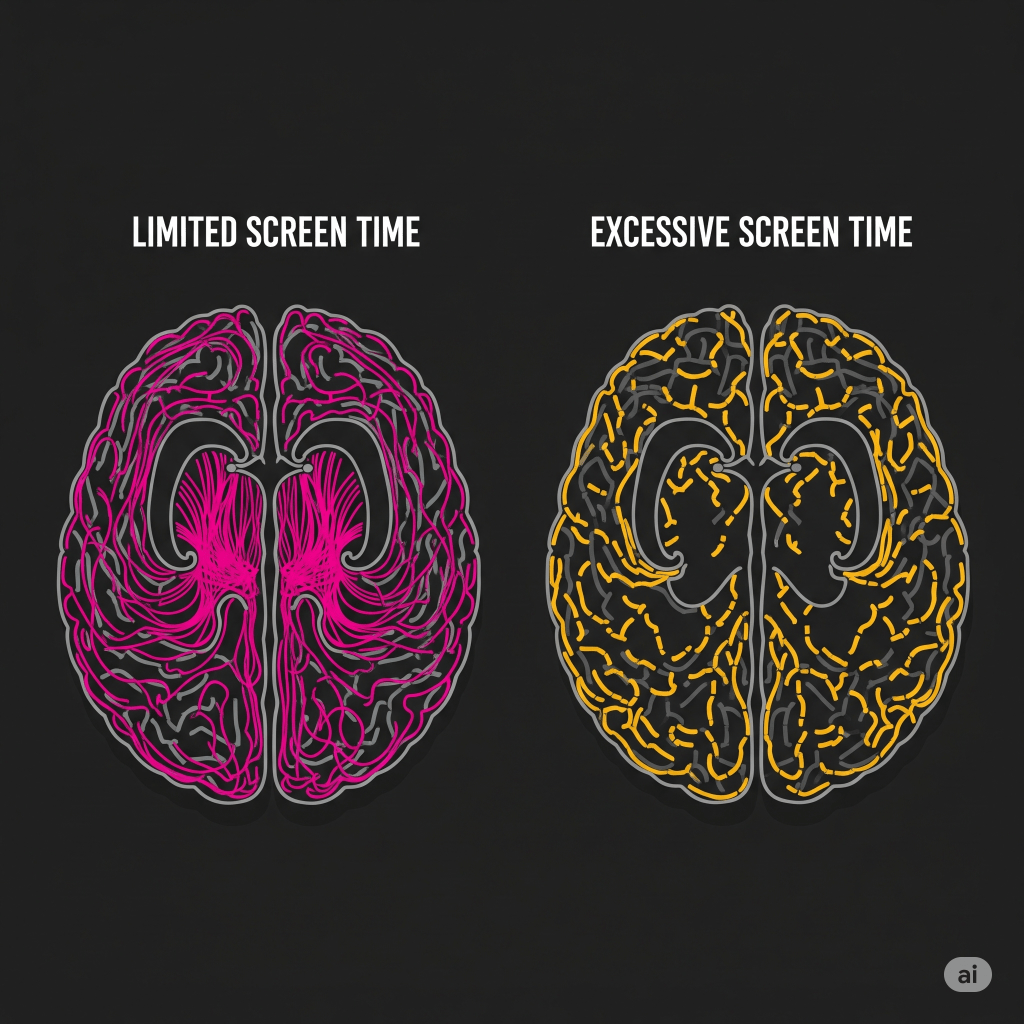
What the heck is white matter? Think of it as the superhighway of the brain, connecting different regions and allowing for quick, efficient communication. It’s essential for things like language and literacy skills. So, when that superhighway isn’t fully built or maintained, traffic gets slow. The result? These children scored lower on vocabulary and literacy tests. Now, this isn’t a one-and-done study. A landmark National Institutes of Health (NIH) study found that children who spent more than two hours a day on screens scored lower on thinking and language tests. We’re talking about a genuine, measurable impact on the very architecture of the brain.
This isn’t about screens being evil. It’s about understanding the developmental stage of a young mind. A child’s brain is literally building itself from the ground up, forming neural connections while pruning away the less-used ones. When that brain is constantly receiving the “impoverished” stimulation of a screen, as some experts have called it, it’s not getting the rich, multi-sensory experiences it needs to thrive.
The Truth Nobody Wants to Talk About: The Most Hated “Trait”
The most hated personality trait in the world? Let’s talk about the one that keeps us from being present. The inability to be truly disconnected. This isn’t about a person, but a behavior. It’s the silent addiction that many of us grapple with, and it’s the very behavior we are, in turn, passing down to our children.
We’re all so busy “doing” that we’ve forgotten how to just “be.” Be with our children. Be in the moment. Be without a screen. The screens are a phenomenal tool, but when they become a substitute for genuine human interaction, that’s when they become a problem. Research shows that even when a TV is on in the background, a child’s language development is affected because the quantity and quality of parent-child interactions decrease. It’s not just the screen’s fault; it’s our own, too. The device creates a distance, a psychological wall that prevents the organic, responsive interactions that are crucial for a child’s brain to develop properly.
(Screen time and young children: Promoting health and development in a digital world)
Beyond the Blue Light: It’s All About Intentionality
This is not a blanket ban on screens. This is a brilliant, bold call for intentionality. Not all screen time is created equal. A well-designed, interactive educational app is not the same as letting a child mindlessly scroll through an endless loop of YouTube videos. When a screen is used as a tool for social engagement—like video-calling a grandparent or looking up an animal you just saw at the zoo—it can be a positive experience. When it’s used as a partner to replace social engagement, that’s where the danger lies.
The real goal isn’t to get rid of screens entirely, but to reclaim our power as the gatekeepers of our children’s experiences. We get to decide what they consume and for how long. The American Academy of Pediatrics recommends limiting screen use for children ages 2 to 5 to just one hour a day. That’s a bold limit, but it’s based on science. It’s about ensuring there’s enough time for the real-world activities that are vital for development: unstructured play, exploration, and, most importantly, human connection.
How To Get Fierce About Screen Time
It’s overwhelming, I know. But here are a few brilliant ways to take control and set new, fierce boundaries that work for you and your family:
- Create “Media-Free” Zones: Declare certain spaces and times as screen-free. The dinner table is a classic one, but what about the car, or the bedroom? Reclaiming these spaces for conversation and quiet time is a powerful move.
- Focus on Content and Context: Be a curious and engaged partner in your child’s screen time. Ask questions about what they’re watching, and watch it with them. This co-viewing can turn a passive experience into an interactive one.
- Lead By Example: This is the hard part, but it’s the most important. Our children are watching us. When they see us constantly on our phones, we’re not just communicating that screens are a distraction; we’re teaching them that our devices are more important than they are. Put your phone away during playtime. Charge it in another room at night.
- Embrace Boredom: This sounds counterintuitive in our always-on world, but boredom is the secret ingredient for creativity. When a child is bored, their imagination kicks in. They’ll find a stick to play with, a story to invent, or a fort to build. Don’t rush to fill every moment with a screen. Let them be a little bored.
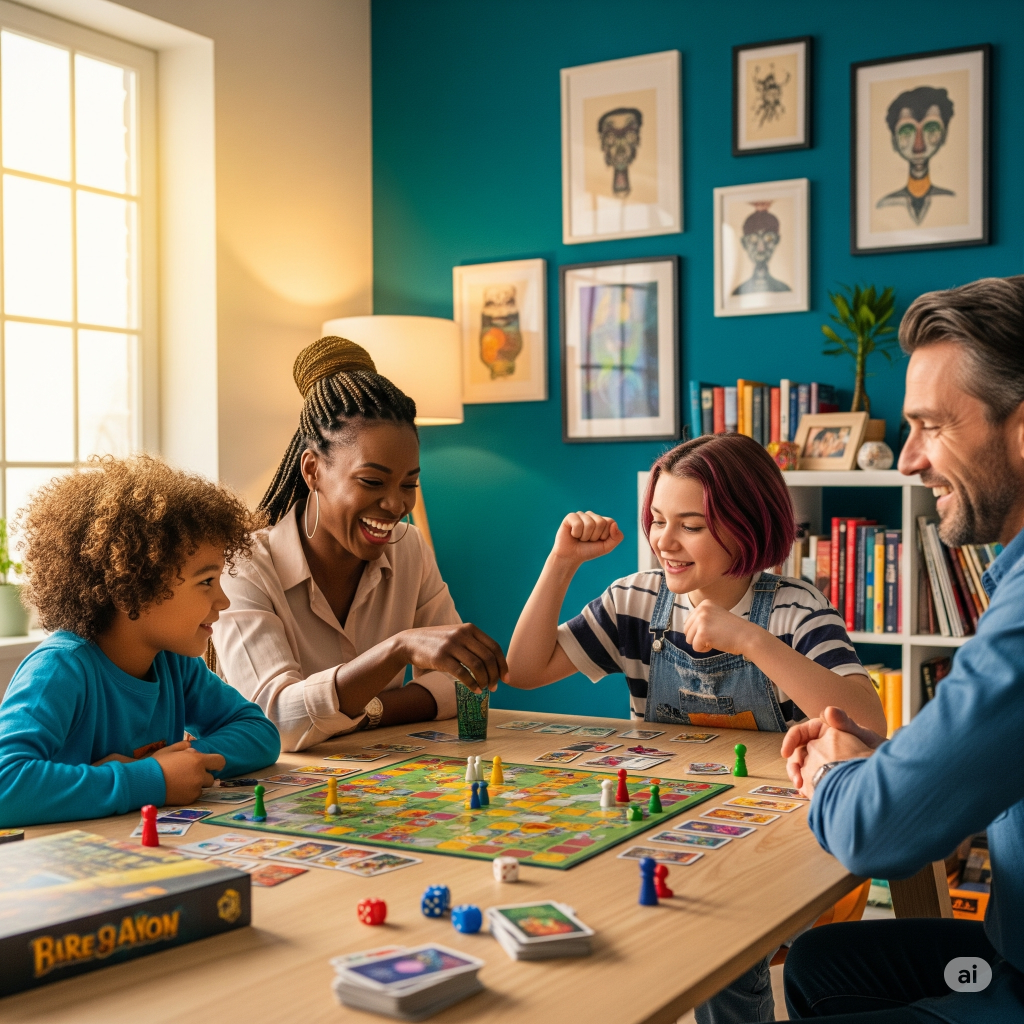
This journey is not about perfection. It’s about progress. It’s about having a real-talk conversation about a real-world problem. It’s about being bold enough to push back against the constant pull of the digital world and brilliant enough to create a home that values connection over convenience.
This is our digital detox, and it starts with a little bit of honesty.





 Fierce Millenial
Leave a reply to Fierce Millenial Cancel reply